
Parking Barrier Philippines: Types, Uses & How It Works
Release time:
2026-10-30
Introduction — A parking barrier, also called an automatic boom barrier gate, is a device that controls the entry and exit of vehicles in a parking area or private property. It usually consists of a motorized housing and a horizontal boom arm that rises to let authorized vehicles pass and lowers to stop unauthorized entry. For condominiums, offices, malls, subdivisions, warehouses and industrial facilities in the Philippines, the right parking barrier supports more organized vehicle access control.
Quick answer: A parking barrier is a motorized boom or gate that controls vehicle entry and exit at a lane, using remotes, cards, RFID or plate recognition to authorize access. Choose the arm type, access method and safety devices based on lane width, traffic volume and site conditions.
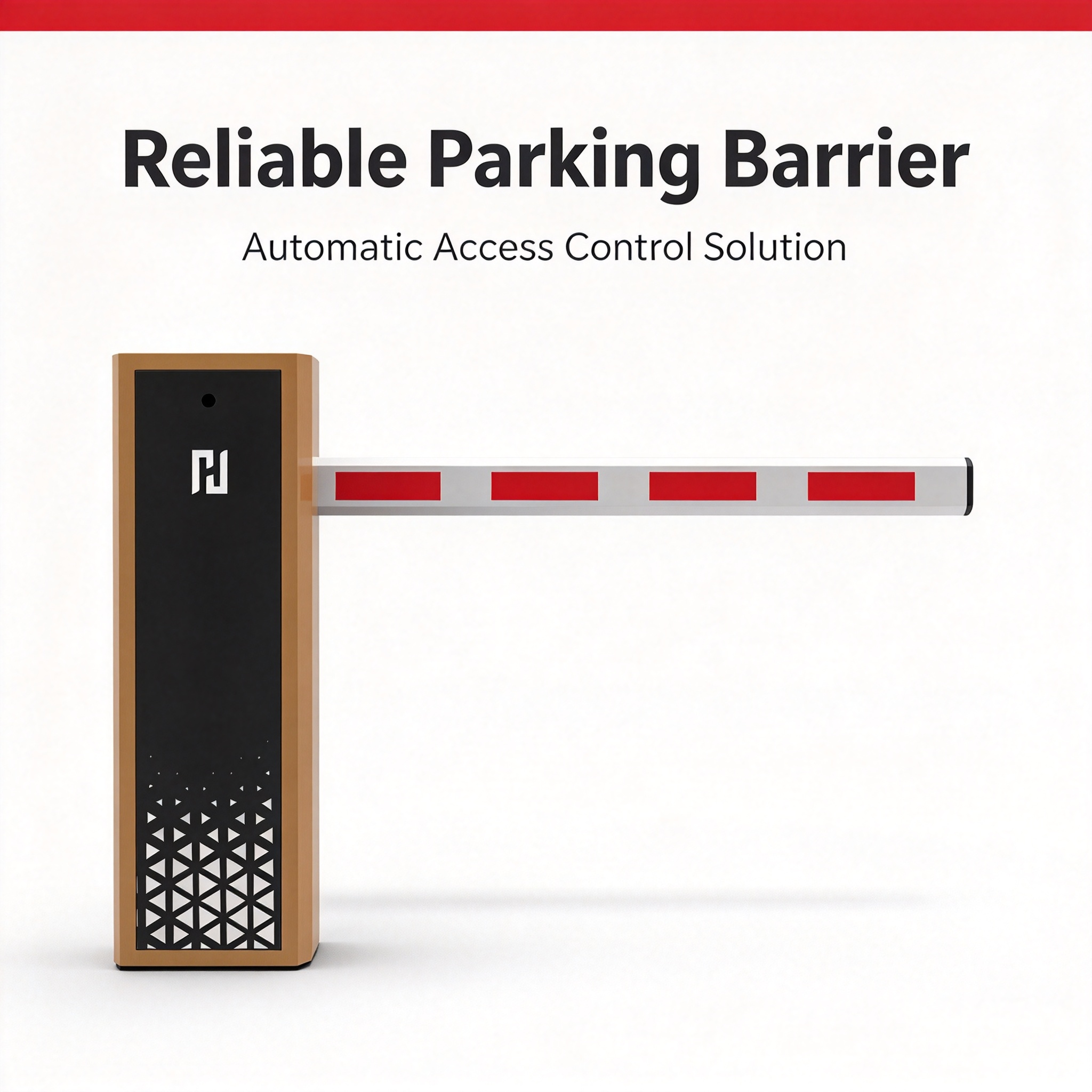
What is a parking barrier?
A parking barrier is a physical barrier placed at a driveway, entrance lane or exit lane to manage the flow of vehicles. In automatic models, a motor and control board raise and lower the boom arm. Depending on the system configuration, it can be operated by remote control, access card, RFID/UHF tag, license plate recognition (LPR/ANPR) or another compatible access-control device.
It is important to note that a barrier gate is not a replacement for a complete security system. It is more effective when combined with a clear access policy, CCTV or monitoring where needed, safety sensors, and a proper process for visitors and emergency vehicles.
Main types of parking barrier
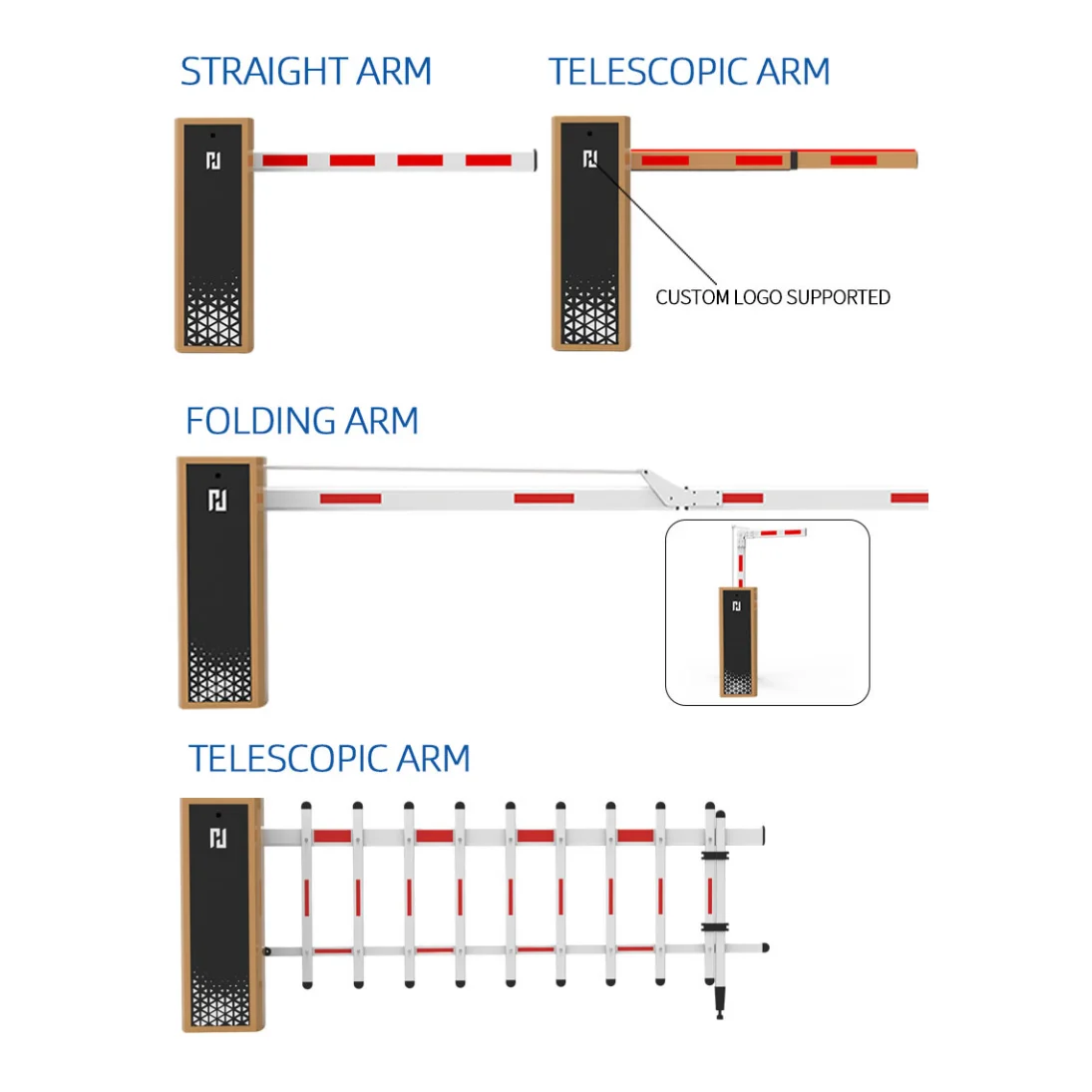
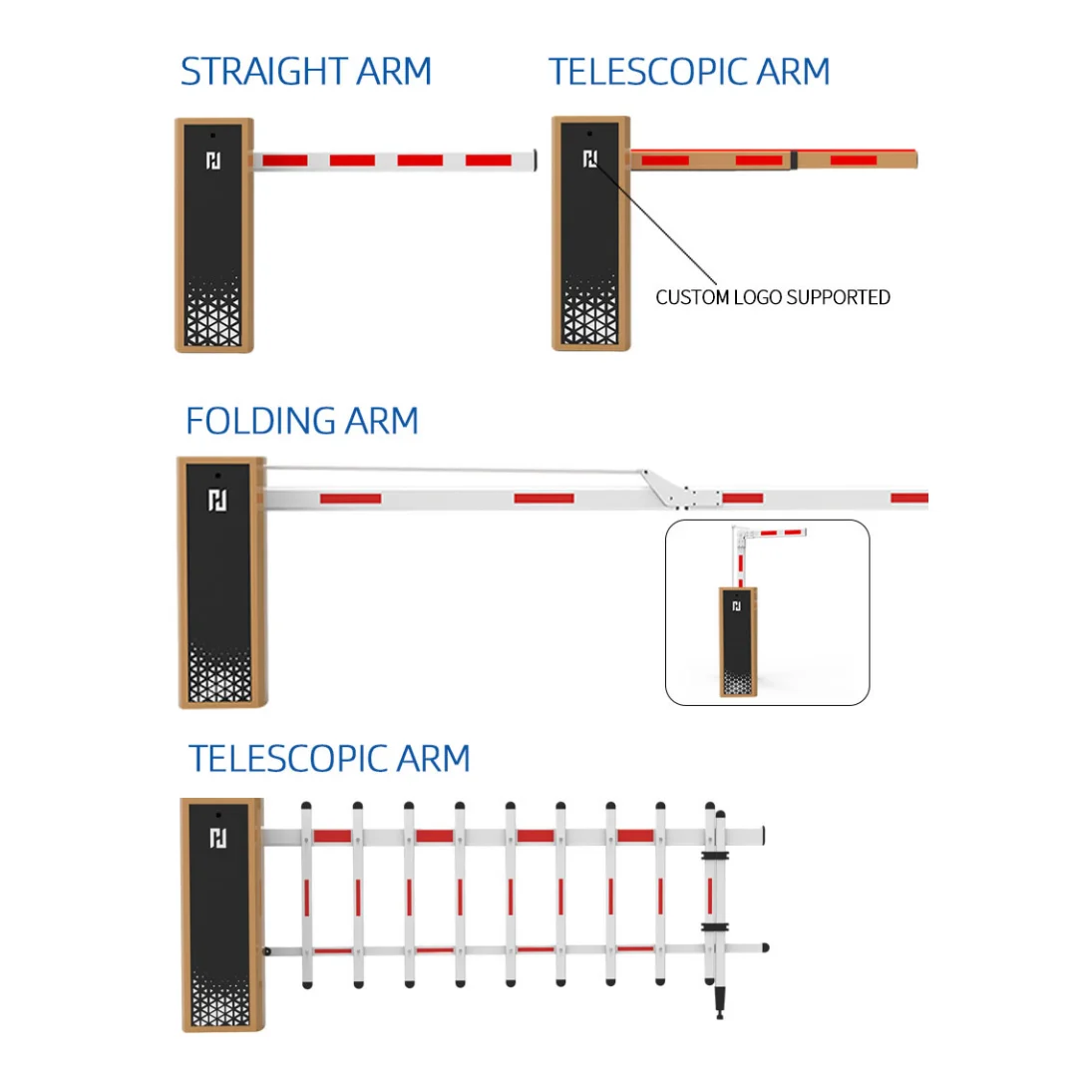
1. Straight-arm boom barrier
The straight-arm barrier has a straight, horizontal boom arm. It is usually suitable for entrance and exit lanes with enough vertical clearance, such as open-air parking lots, commercial buildings, subdivisions and industrial sites. Choose the arm length and operating speed based on lane width, vehicle volume and the required safety clearance.
2. Folding-arm barrier
A folding-arm barrier has an arm that folds as it rises. It can be considered for basement parking, covered driveways or areas with limited ceiling height. Before choosing, measure the clearance across the full travel of the arm and confirm that the mechanism matches the actual entrance layout.
3. Fence-arm or multi-section barrier
A fence-arm barrier uses more horizontal sections to help block passage under or around the boom. It can be used in areas that need a more controlled vehicle lane, but wind exposure, arm balance, lane width and manufacturer specifications must be reviewed before setting the configuration.
4. High-speed and heavy-duty barrier
A high-speed barrier is designed for sites that need a fast entry and exit cycle. A heavy-duty barrier may be suitable for higher operating frequency or harsher conditions at commercial and industrial locations. Do not choose based on the words "high-speed" or "heavy-duty" alone; confirm the cycle rating, arm length, motor type, duty cycle and warranty in the actual datasheet.
5. LPR/ANPR or RFID-integrated barrier
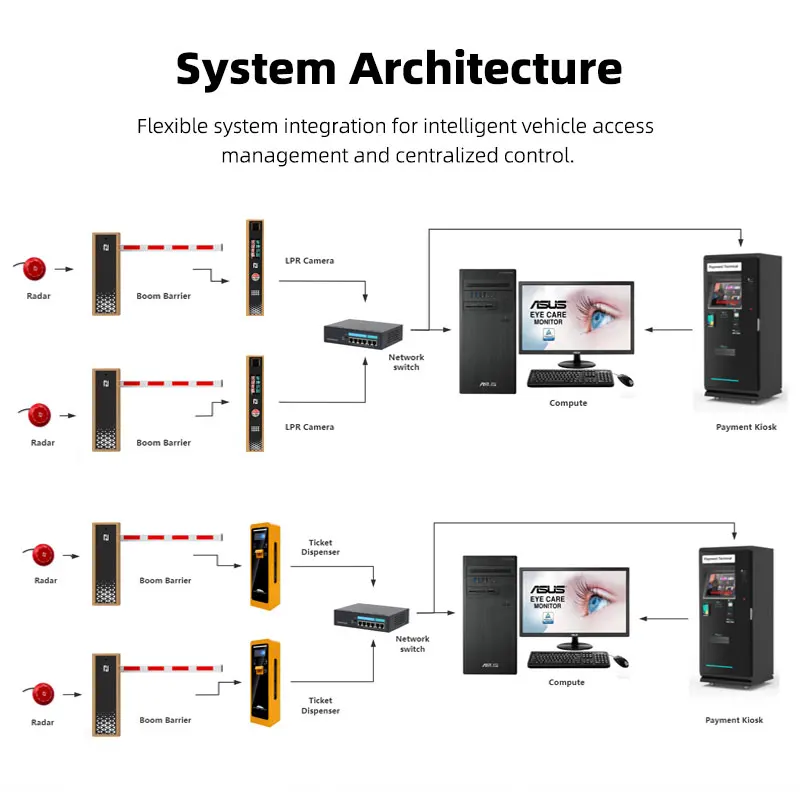
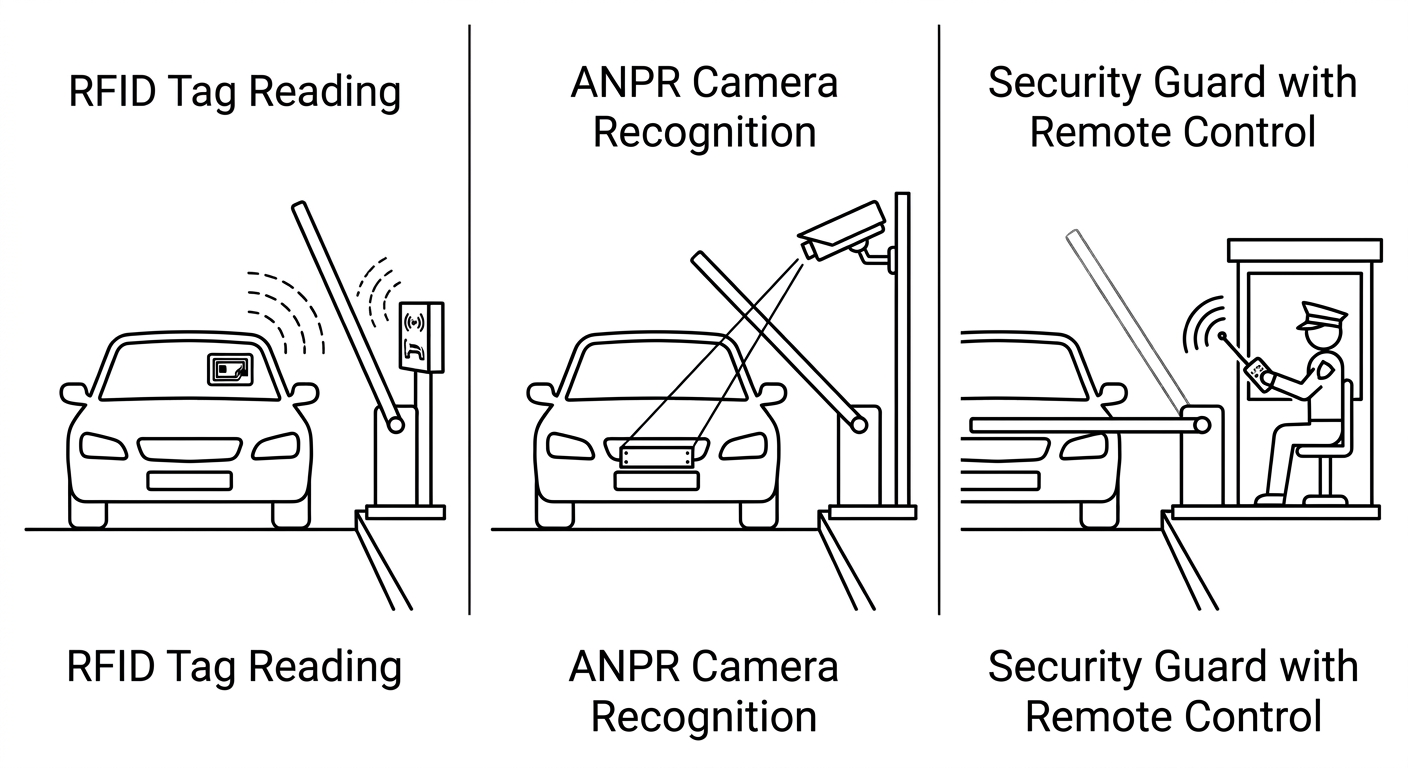
A parking barrier can be connected to an LPR/ANPR camera to read the vehicle's plate number, or to an RFID/UHF reader to identify an authorized tag or card. Depending on the software and system design, barrier opening can be automated, entry and exit events logged, and parking management supported. Camera, controller, software, network and local plate-reading conditions must all be confirmed for compatibility.
How does an automatic parking barrier work?
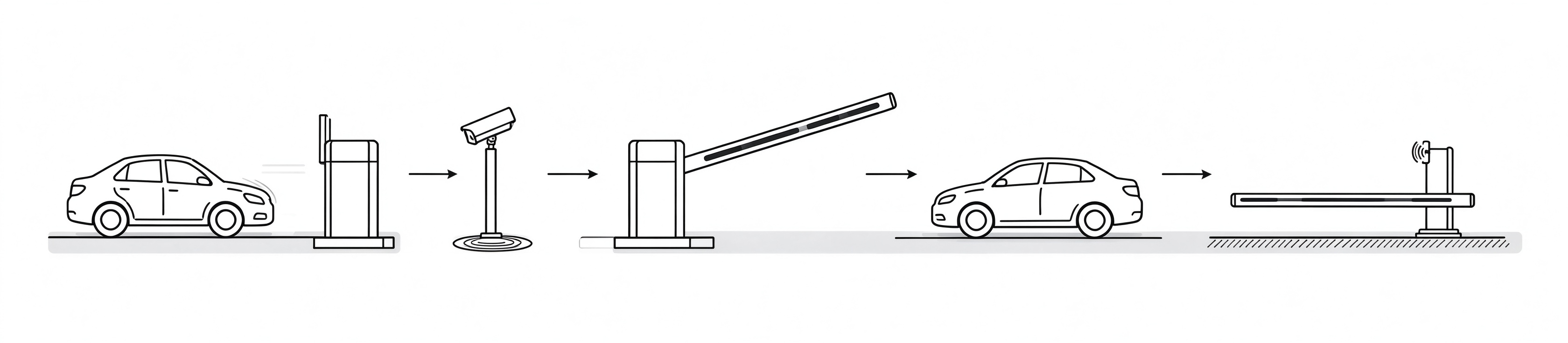
- Vehicle approach: The vehicle stops at the designated detection point or access lane.
- Permission verification: An RFID card or tag, remote, access credential or LPR/ANPR camera may be used to check whether the vehicle is authorized.
- Opening command: When the set access rule is met, the controller sends a command to the barrier operator.
- Boom arm raises: The motorized mechanism raises the arm so the vehicle can pass. The actual speed depends on the model, arm length and configuration.
- Detection and closing: A loop detector, radar, photocell or other compatible safety device may be used to detect the vehicle or an obstruction. The system should be designed and tested to prevent closing while a vehicle or person is in the danger zone.
- Event recording: If integrated parking software is used, the access record may be saved for monitoring, audit or parking operations. Features depend on the actual system package.
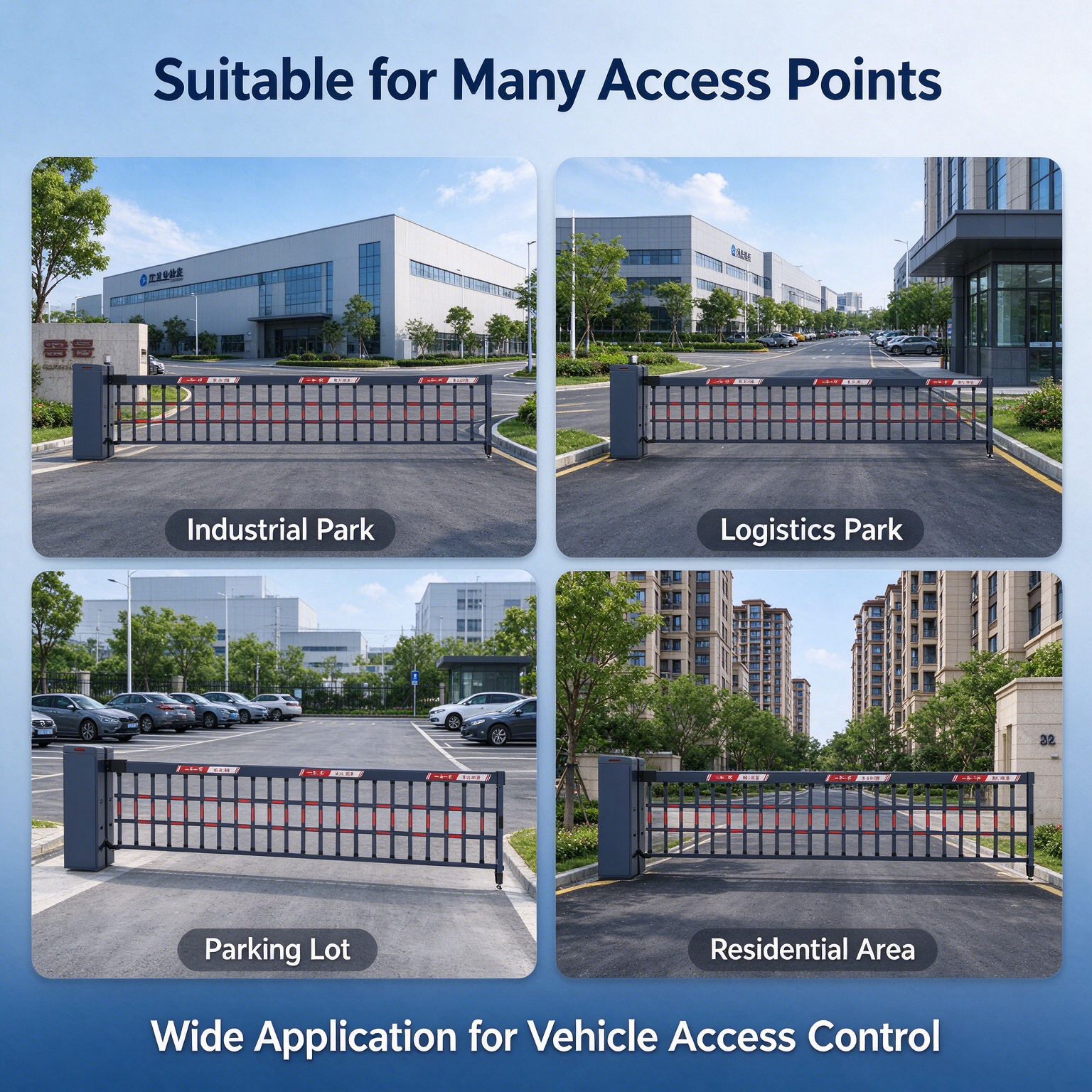
Where are parking barriers used in the Philippines?
- Condominiums and residential subdivisions: For resident access, visitor screening and more organized vehicle entry.
- Shopping malls and commercial parking: To regulate vehicles in entry and exit lanes and, where integrated, to support parking records.
- Office buildings and business parks: To separate authorized employee vehicles, visitors and service vehicles.
- Warehouses and industrial facilities: For truck lanes, loading areas and controlled perimeter access; sturdier equipment and clear safety procedures may be required.
- Hospitals, schools, transport hubs and public facilities: For smoother vehicle flow, with a separate process for emergency vehicles and authorized service access.
How do you choose the right parking barrier?
Check lane width and clearance
Measure the actual width of the entrance and identify whether there is a roof, beam, low ceiling, curved driveway or other obstruction. These measurements help in choosing a straight arm, folding arm or other configuration.
Match operating frequency to traffic volume
Estimate the number of vehicles per hour and the peak-hour queue. For high traffic, review the cycle rating, opening and closing time, duty cycle and recovery procedure in case of a fault. Do not rely on the marketing label alone; ask for the datasheet and written confirmation from the supplier.
Choose the access method
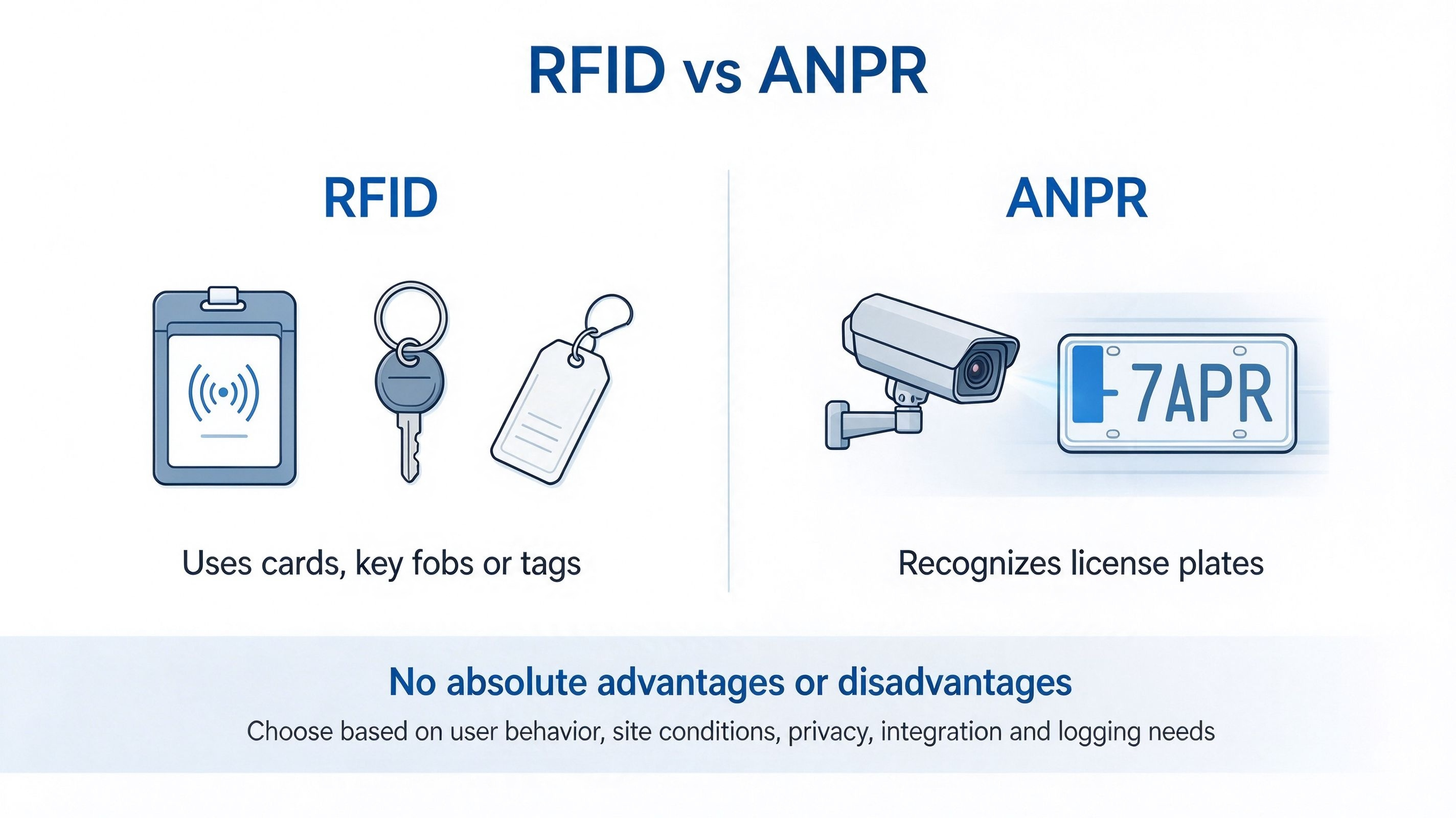
RFID/UHF may suit vehicles with issued tags; LPR/ANPR can help when the plate number needs to be identified; a remote or access card can be used in a simpler setup. These can be combined if the controller and software support it.
Include safety devices and manual operation
Confirm which safety accessories are included or optional, such as loop detector, radar, photocell, warning light and anti-collision feature. Also ask how the barrier is operated or released manually during a power failure or system fault. The exact setup should follow the site risk assessment and manufacturer instructions.
Consider outdoor conditions and maintenance
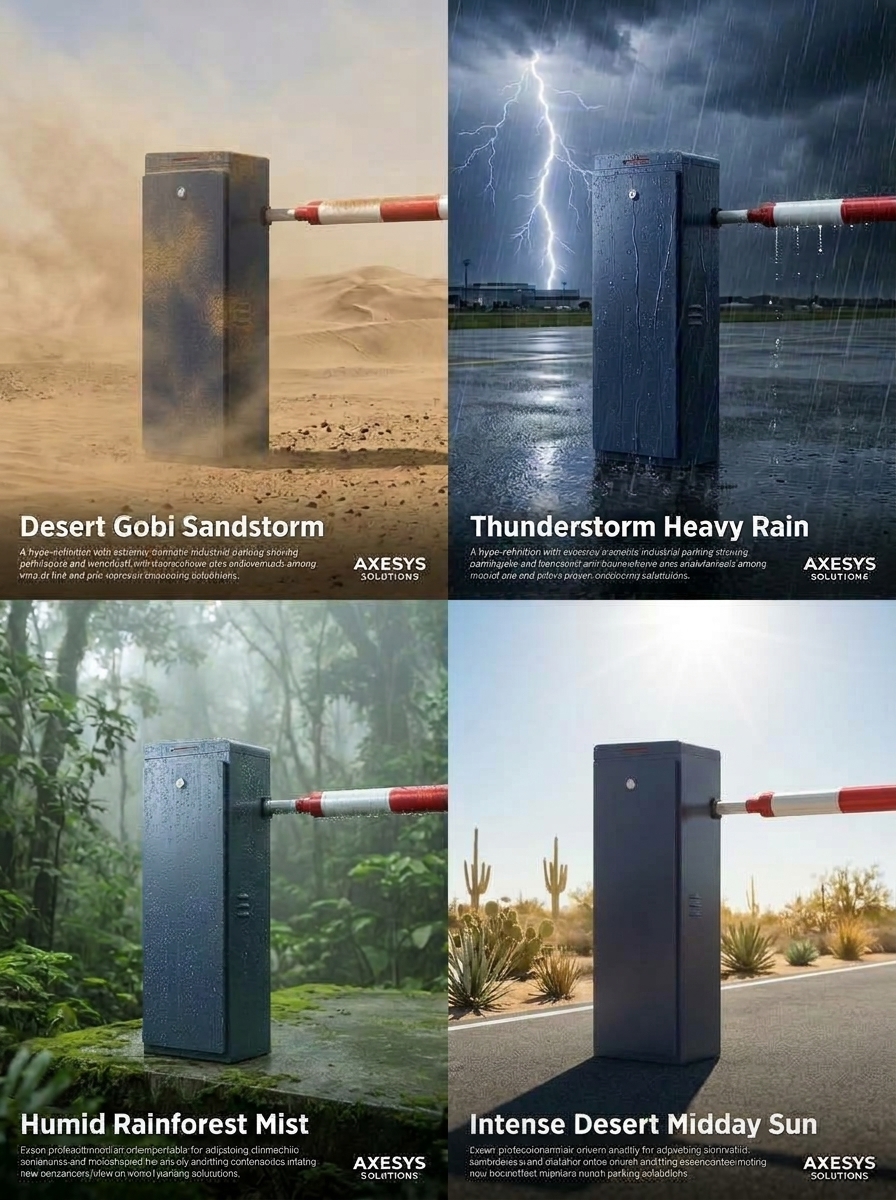
For outdoor installation, review the enclosure protection rating, corrosion protection, drainage, exposure to rain and dust, and the appropriate foundation. Set a regular inspection schedule for arm balance, fasteners, sensors, electrical connections and manual release. Do not assume that all models share the same weather rating.
Confirm integration and after-sales support
Before buying, request the wiring diagram, interface details, compatibility list, installation requirements, spare-parts availability, warranty terms and remote technical support process. For a Philippine project, make sure the delivery scope, commissioning responsibilities and who provides local installation and maintenance are clear.
Benefits of a parking barrier
- More controlled access: Creates a physical checkpoint for vehicles.
- More organized traffic flow: Helps set an entry and exit procedure and reduces lane confusion when the site design is sound.
- Possible automation: With compatible RFID or LPR/ANPR integration, manual verification tasks may be reduced.
- Access records: Compatible software can store logs for monitoring and operations.
- Flexible configuration: Different arm types and access-control options can be matched to the site.
These benefits depend on correct selection, installation, integration and maintenance. The barrier alone does not automatically guarantee complete security or zero queues in every situation.
Why consider Baroxon for a parking barrier project?
On its official Philippine website, Baroxon lists the categories boom barrier/boom gate, high-speed barrier gate, ALPR/LPR car plate system, automatic RFID boom barrier, radar sensor, parking lock and barrier accessories. The site also shows applications for residential, commercial, industrial, logistics and public facilities. Choose the specific model based on the actual technical datasheet and project requirements, not on the product name alone.
Frequently asked questions (FAQ)
Is a parking barrier the same as a boom barrier?
In many commercial contexts, the two terms are used for the motorized arm that opens and closes a vehicle lane. However, "parking barrier" may have a broader meaning with some suppliers and include other parking-control equipment. Check the exact product description.
Can a parking barrier work with LPR/ANPR?
Yes, if the barrier controller, LPR/ANPR camera, software and communication interface are compatible. Plate recognition should be tested under the actual lighting, camera angle, lane layout and plate conditions of the site.
Is RFID better than LPR?
There is no single answer for every site. RFID requires an authorized tag or card; LPR depends on reading the plate number and is sensitive to camera placement, lighting and plate visibility. Choose based on the user workflow, traffic volume, security policy and budget; a combined setup can also be used if supported.
What should be prepared before installation?
Prepare the site measurements, lane layout, power supply details, drainage and foundation plan, access-control requirements, safety-device plan, cable routes and maintenance access. Have the final design validated by a qualified installer and follow the manufacturer instructions and local electrical and safety requirements.
Can it be raised manually during a power failure?
This depends on the model and the emergency-release mechanism. Before deployment, learn the correct manual release procedure, its limitations and the steps to keep people and vehicles safe. Do not force the arm if the procedure is not known.
Conclusion
A parking barrier is a practical part of vehicle access control for parking lots, condominiums, malls, offices and industrial facilities in the Philippines. To choose well, review lane geometry, traffic volume, arm type, access method, safety devices, weather exposure, integration requirements and after-sales support. A well-specified and well-maintained system supports clearer access procedures and more organized operations.
Call to action: For a parking barrier suited to your site, prepare the lane width, estimated vehicles per hour, preferred access method and installation environment before requesting a technical recommendation or quotation from Baroxon.
Latest News
Baroxon® | Leading Boom Barrier Manufacturer
Advanced Security Access Control and Intelligent Parking Solutions.
Company Strength
Adequate Inventory
Fast Shipping
Our Products
CONTACT US
Address: No. 2 Wanshou Road, International Innovation Industrial Park, Jinan, Shandong, China


© COPYRIGHT 2025 Baroxon® | Leading Boom Barrier Manufacturer

Contact Us
Professional Manufacturer of Vehicle Barriers & License Plate Recognition Cameras,Smart Parking Access Control Solutions for Global Clients,Reliable Barrier Gates + LPR Systems, Customized to Your Project,From residential communities, commercial shopping malls, industrial parks to highway toll stations, our matched barrier & LPR sets can realize automatic license plate identification, automatic gate lifting, real-time access records, automatic charging and remote management.