
Parking Barrier for Underground Car Parks in the Philippines
Release time:
2026-10-30
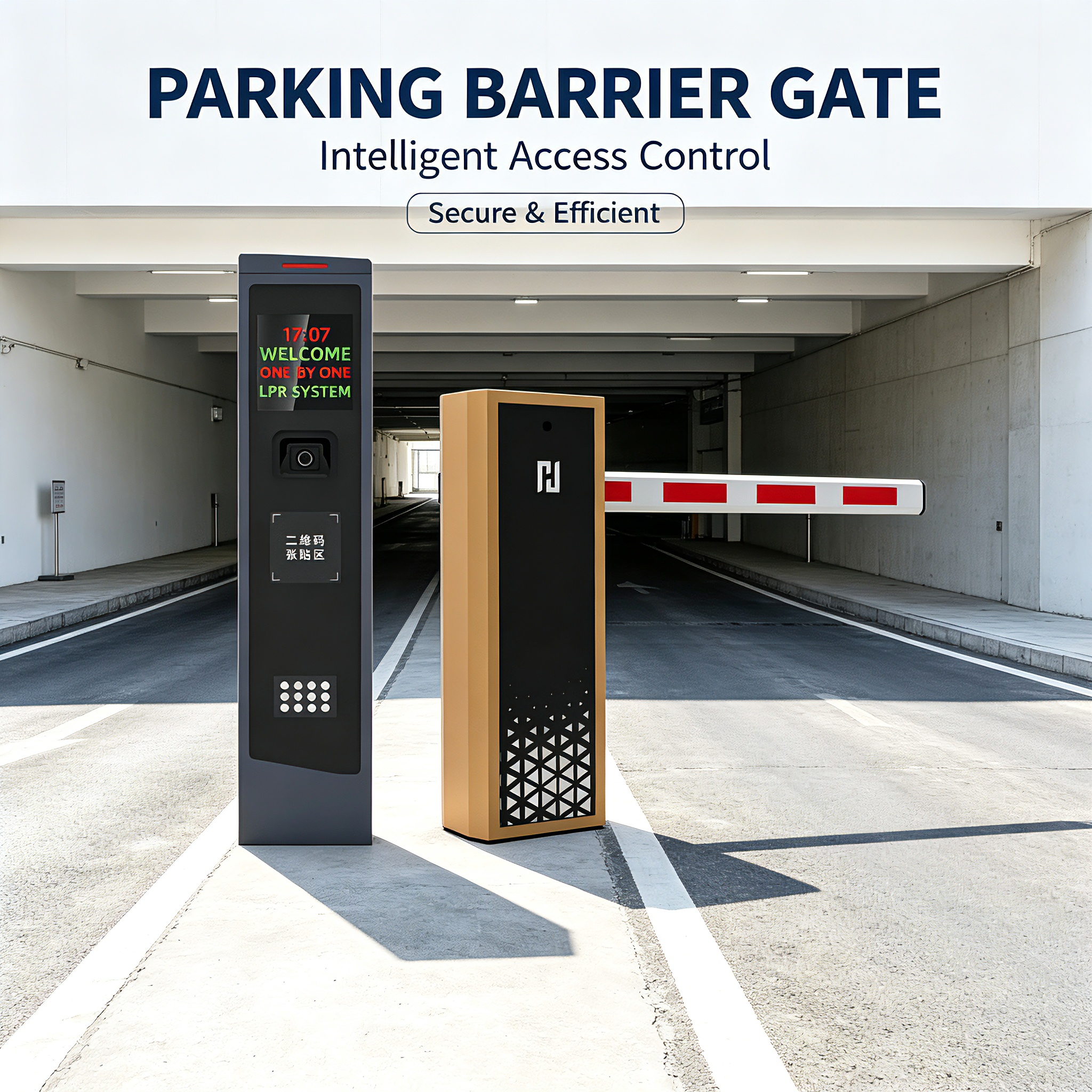
Choosing a parking barrier for an underground car park requires a careful look at ceiling clearance, driveway width, ramp slope, vehicle flow and safety requirements. Unlike an open-air parking entrance, vertical space in a basement car park may be limited. That is why it is important to select the right boom arm and control configuration so the barrier does not hit the ceiling, lights, sprinkler pipes, ventilation ducts or other building services.
Quick answer: For an underground car park, measure the real ceiling clearance and boom-arm path first, then choose a folding arm barrier if headroom is tight. The correct choice depends on lane width, ramp approach, traffic volume, safety detection and access control, not on price alone.
For condominiums, office towers, shopping malls, hotels and mixed-use developments in the Philippines, a good parking barrier system should provide smooth vehicle access, clear safety detection and reliable integration with parking management. BAROXON Philippines offers automatic boom barrier options, including folding-arm barriers for low-ceiling commercial and residential parking facilities, as well as LPR/ANPR and RFID-based access-control solutions.
1. Measure Ceiling Clearance and Vertical Obstructions First
Before choosing a barrier, carry out an actual site measurement. Measure the distance from the finished floor level to the lowest part of the ceiling or any suspended equipment across the full travel of the boom arm. Include sprinkler lines, cable trays, ventilation ducts, lighting fixtures, signboards, beams and pipes in the survey. Do not rely on the architectural drawing alone; as-built conditions may differ.
Knowing the maximum vehicle height is not enough. You also need to check where the boom arm will pass as it opens and closes. Prepare a clearance envelope or a simple side-view layout showing the cabinet, pivot point, arm path and the nearest obstruction. Have the installer validate it before you place an order.
2. Consider a Folding Arm Boom Barrier for Low Ceilings
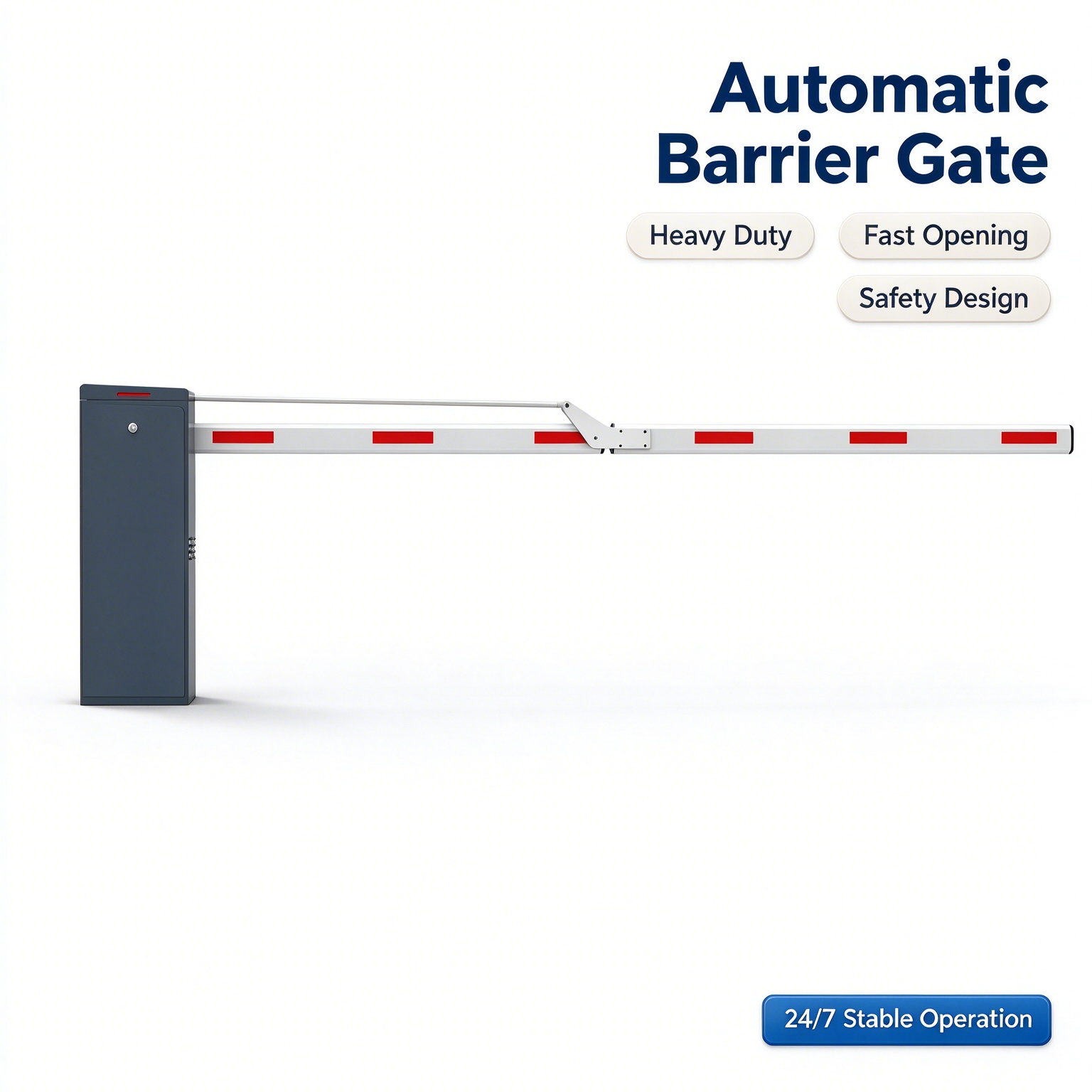
Where vertical clearance is limited, a folding arm boom barrier may be more suitable than a standard straight arm. A folding arm has an articulated joint that lets the boom fold as it rises, so it can be used at entrances with low ceilings or overhead obstructions. BAROXON features the Versatile Automatic Folding Arm Boom Barrier for low-ceiling commercial and residential parking, and the Automatic Folding Fence Parking Barrier for underground and low-ceiling parking facilities.
A folding arm is not automatically suitable for every basement, however. The correct folding angle, arm length and cabinet position must be selected based on the actual driveway geometry. Confirm whether a 90-degree or 180-degree folding configuration is needed, and ask the supplier for a dimensional drawing showing the full opening path.
3. Choose the Right Arm Length and Lane Configuration
Measure the clear width of the lane from the cabinet to the other side of the driveway. Take into account curbs, pedestrian walkways, guardrails, columns and any island that may affect arm length. For the BAROXON YH-PDPY601 configuration described in the product listing, straight, folding (90°/180°) and fence-type boom arms are listed, with a customizable arm-length range of 1 m–6 m. These values are model-specific; confirm the compatibility and maximum length of the exact unit you will buy.
In an underground car park, the driveway may be narrower and walls or columns may be closer. Make sure the arm will not catch on them and will not block the pedestrian route. If there are separate entry and exit lanes, check whether separate barrier operators for each lane are better, and where the reader, camera and safety sensors should be placed.
4. Plan the Ramp Slope and Vehicle Approach
The slope of the basement ramp matters, especially where the transition from ramp to flat driveway is close to the barrier. Look at where a vehicle will naturally stop to scan a plate or an RFID credential. There should be enough stopping distance so the vehicle does not stop on the steep section or at the turning point itself.
Avoid placing the barrier where driver visibility is limited or where there is a blind corner immediately before the boom arm. Consider queue length, turning radius, headroom and the possibility of a vehicle reversing. For multi-level parking, directional signs and lane markings should be clear so entering and exiting vehicles do not meet head-on.
5. Review the Motor, Operating Speed and Traffic Volume
Estimate the number of vehicles entering and leaving per hour, especially during the morning arrival, lunch period and evening peak. In condominium and office parking, many vehicles may arrive at the same time. For a mall or mixed-use property, operating hours may be longer and vehicle types more varied. Choose a motor and duty-cycle rating that matches actual use.
The BAROXON YH-PDPY601 listing states DC 24V brushless, AC 220V and servo motor options; it also lists 100% continuous duty / 5,000 cycles per day and adjustable opening/closing speed options. Do not treat these as the universal specification of all BAROXON barriers. Confirm the exact motor, duty cycle, speed and power requirement in the datasheet of the selected model.
6. Put Vehicle Safety and Anti-Collision Protection First
Safety planning in a basement is delicate because maneuvering space is limited, and pedestrians, motorcycles, delivery vehicles and cars may share one access zone. Review which vehicle-detection devices are needed: inductive loop detector, photocell, radar sensor or another compatible safety input. Confirm whether the barrier controller supports anti-collision logic, auto-rebound or automatic stop when there is an obstruction.
Do not rely on a single sensor if the site needs wider detection coverage. Lay out the loop detector before pouring or cutting the floor, and make sure the sensor position is correct relative to the stopping line and boom arm. Provide warning lights, signage, pedestrian separation and an emergency or manual release procedure as well.
7. Choose the Access Control: LPR/ANPR, RFID or UHF
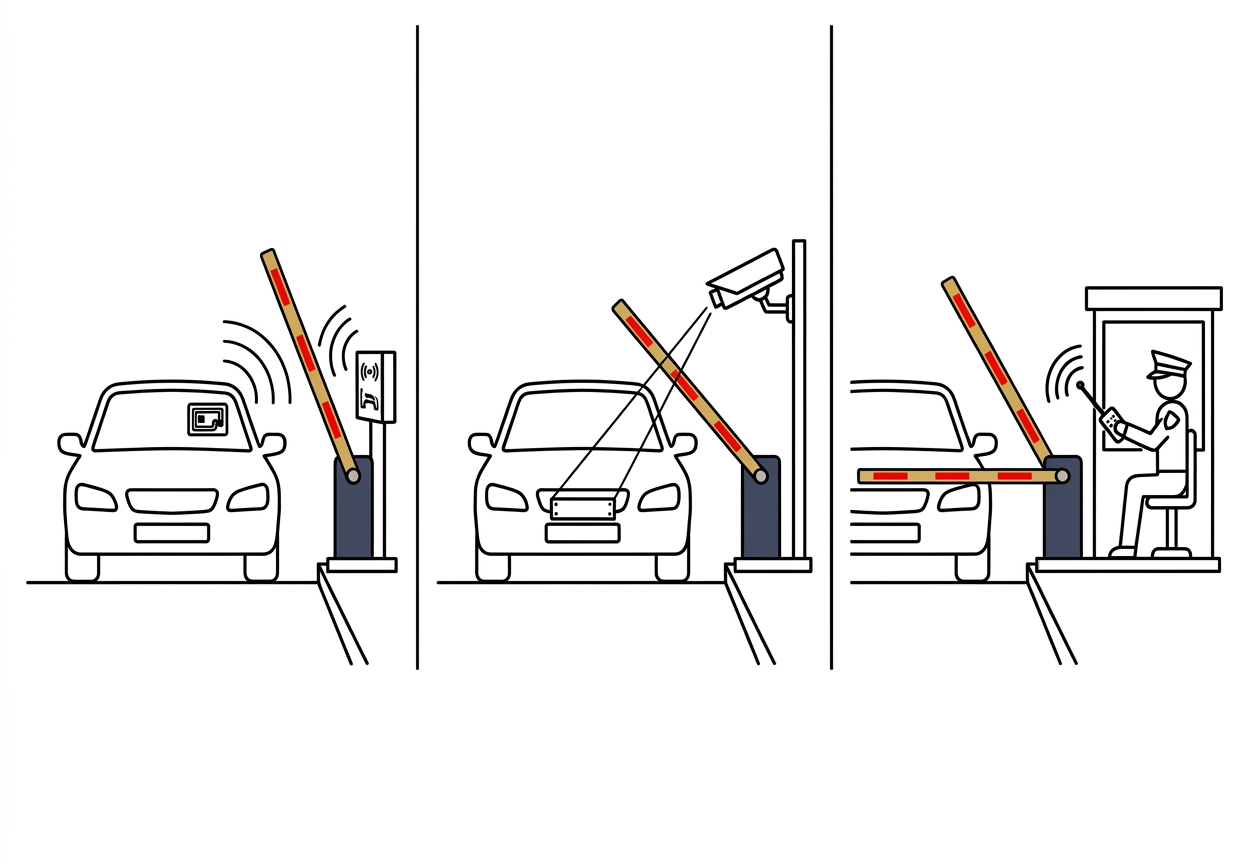
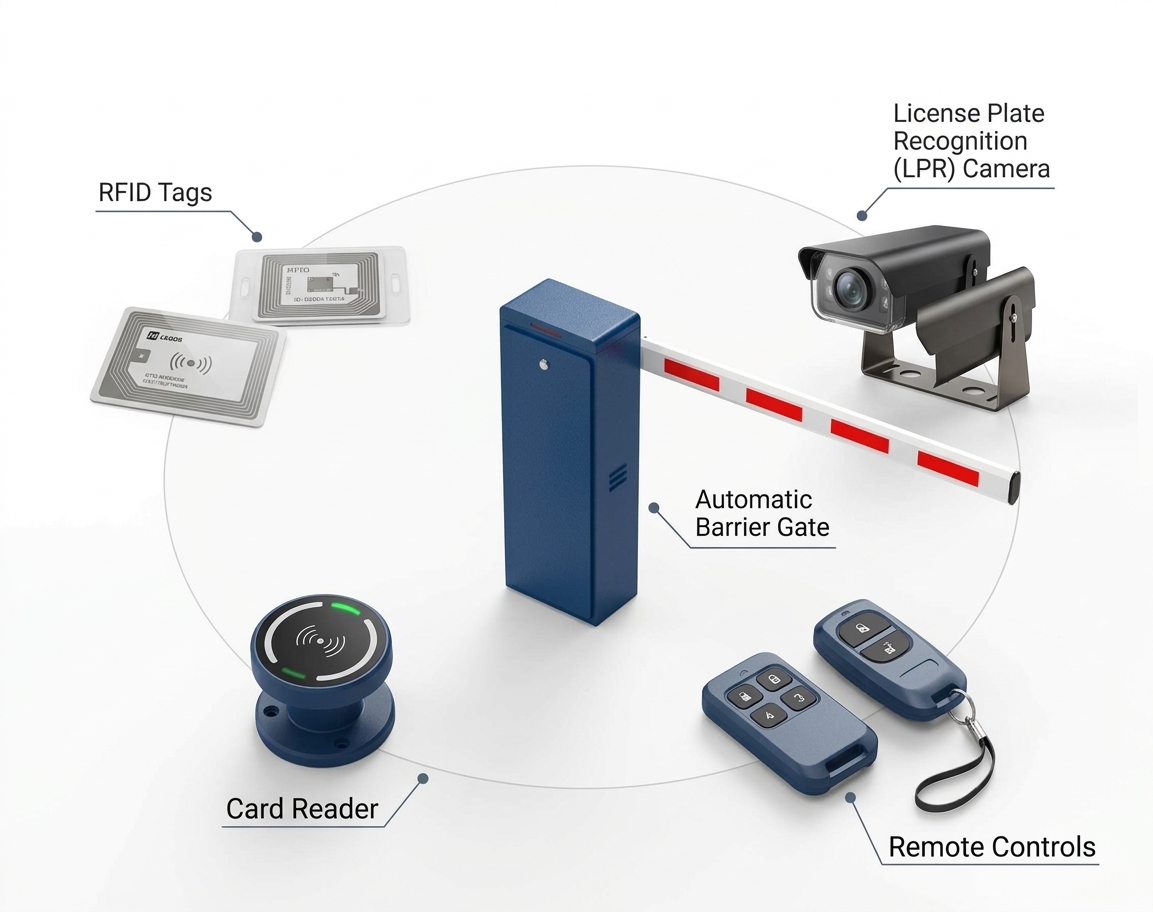
For regular tenants and employees, an RFID card or UHF vehicle tag can be used to speed up entry. For visitor parking, an LPR/ANPR camera that reads the plate number and allows ticketless access may be more suitable if system integration is sound. QR codes, PINs or intercoms may also be used depending on the building's parking policy.
BAROXON Philippines offers LPR/ANPR barrier solutions and RFID/UHF-compatible parking access options. Before buying, confirm whether the camera, reader, controller, software license, network equipment and integration service are included. Also clarify how visitor records, whitelists and blacklists, access schedules and manual override are managed.
8. Consider Ventilation, Moisture and the Basement Environment
Humidity may be higher and natural ventilation weaker in an underground car park than at an open-air entrance. Check for possible water seepage, flooding, condensation, construction dust or exposure to cleaning chemicals. Choose the barrier cabinet location so it is not exposed to direct water flow or blocked from maintenance access.
Confirm the ingress-protection rating of the exact model and follow the manufacturer's installation instructions. Do not assume the IP rating is the same for all configurations. If there is a flood risk, discuss a raised mounting base, drainage route, cable-entry protection and emergency shutdown procedure with the site engineer.
9. Check the Power Supply and Emergency Operation
Have the electrical supply, grounding, circuit protection, cable routing and surge protection checked. In basement parking there may be a generator or building backup power, but you should not assume the barrier is automatically connected to the emergency power system. Define how the barrier will be opened or secured during a power failure, and whether a UPS or another backup arrangement is needed.
Ask whether there is a manual release mechanism and where it can be accessed safely. Security staff should know the emergency procedure, but access should be controlled so vehicle security is not compromised. Coordinate the wiring and fail-safe behavior with building management and the electrical contractor.
10. Look at Maintenance Access and Long-Term Support
Choose a location where the cabinet can be opened easily and the motor, spring mechanism, control board and wiring inspected without blocking the driveway. In underground parking, it is important to plan the maintenance window so peak-hour traffic is not disrupted. Ask for a preventive-maintenance schedule, spare-parts list, warranty terms and technical support process.
The BAROXON site describes remote diagnostics, spare parts, installation guides and technical assistance as part of its after-sales support. For a project in the Philippines, confirm the actual response time, parts availability, support channel and shipping lead time before signing a purchase order.
11. Compare the Whole System Cost, Not Just the Barrier Price
In an underground car park, there may be additional costs for a folding arm, safety sensors, LPR camera, RFID/UHF reader, loop detector, cable works, civil works and software integration. Compare itemized quotations so you can see what is and is not included. Include installation, commissioning, preventive maintenance, replacement parts and downtime risk in the total cost of ownership.
Ask for a technical submittal with the model number, overall dimensions, arm folding diagram, arm length, motor type, duty cycle, opening speed, IP rating, safety interface and electrical requirements. It is easier to compare suppliers when the technical scope they quote is the same.
BAROXON Solutions to Review for Underground Parking
For low-ceiling entrances, start the evaluation with the BAROXON Versatile Automatic Folding Arm Boom Barrier and the Automatic Folding Fence Parking Barrier. For automated visitor access, review the All-in-One LPR Barrier Gate with straight, folding and fence arm options. If an unattended parking structure is required, look at the AC DC Motor Barrier Gate for Automated Unattended Parking Structure. These are product options for technical evaluation; the final selection should be based on the site survey and confirmed dimensional drawings.
Questions to Prepare Before Requesting a Quotation
- What is the minimum ceiling clearance across the full travel of the boom arm?
- What is the driveway width, and where are the nearest column, wall or pipe?
- Is a 90° or 180° folding arm required?
- What is the estimated number of vehicles per hour during the peak period?
- Is LPR/ANPR, RFID card, UHF tag, QR code or intercom required?
- Which safety sensors and anti-collision functions are needed?
- What are the power supply, backup power and manual release requirements?
- What is the exact model specification, warranty and spare-parts arrangement?
FAQ: Parking Barrier for an Underground Car Park
What type of parking barrier is suitable for an underground car park?
If ceiling clearance is low, a folding arm boom barrier may be suitable because the articulated arm folds as it rises. Even so, the arm path, folding angle, lane width and site dimensions should still be checked before choosing.
What is the difference between a straight arm and a folding arm barrier?
A straight arm is a single rigid boom that generally needs more vertical clearance when raised. A folding arm has an articulated section that can help at low-ceiling entrances. The choice depends on ceiling height, lane layout and the required arm length.
Can LPR/ANPR be used in basement parking?
LPR/ANPR can be used if camera placement, lighting, plate capture angle and network connection are suitable. Plate recognition should be tested under actual basement lighting and vehicle approach conditions before final commissioning.
Is a loop detector needed at an underground parking entrance?
This depends on the safety design and controller configuration. An inductive loop detector can help with vehicle presence detection, but the loop position and installation must be correct. A photocell, radar or other safety devices may also be needed based on the site risk assessment.
What happens if the basement parking barrier loses power?
There should be a clear emergency procedure agreed by building management and the installer. Confirm whether there is a manual release, a UPS or generator-backed supply, and what the fail-safe state of the barrier will be. Do not assume a backup battery is included in every model.
What information is needed to choose the right folding barrier?
Prepare the ceiling clearance, driveway width, boom-arm path, folding angle, traffic volume, power supply, safety-device requirements and access-control method. Supplier recommendations will be more accurate with site photos and a dimensioned layout.
Conclusion: Prioritize Clearance, Safety and System Compatibility
The best parking barrier for an underground car park is not simply the fastest or the cheapest. It should fit the actual ceiling clearance, driveway geometry and ramp layout; use the right straight or folding arm; have a suitable motor and duty cycle; and integrate with reliable vehicle detection and access control.
Call to action: For condominiums, malls, office buildings and mixed-use developments in the Philippines, contact BAROXON for a model recommendation based on site measurements. Prepare the ceiling clearance, lane width, traffic estimate, access-control preference and photos of the entrance so the right barrier configuration can be assessed.
Latest News
Baroxon® | Leading Boom Barrier Manufacturer
Advanced Security Access Control and Intelligent Parking Solutions.
Company Strength
Adequate Inventory
Fast Shipping
Our Products
CONTACT US
Address: No. 2 Wanshou Road, International Innovation Industrial Park, Jinan, Shandong, China


© COPYRIGHT 2025 Baroxon® | Leading Boom Barrier Manufacturer

Contact Us
Professional Manufacturer of Vehicle Barriers & License Plate Recognition Cameras,Smart Parking Access Control Solutions for Global Clients,Reliable Barrier Gates + LPR Systems, Customized to Your Project,From residential communities, commercial shopping malls, industrial parks to highway toll stations, our matched barrier & LPR sets can realize automatic license plate identification, automatic gate lifting, real-time access records, automatic charging and remote management.