
Parking Barrier Safety Sensors for Philippine Facilities
Release time:
2026-10-30
An automatic parking barrier is not only about opening and closing the boom arm quickly. What matters more is whether the system can tell that a vehicle or pedestrian is in the danger zone before the barrier moves. For condominiums, office towers, malls, warehouses, industrial sites and paid parking facilities in the Philippines, a properly planned safety sensor is an essential part of vehicle access control.
Quick answer: A parking barrier safety sensor detects vehicles and pedestrians in the boom arm's path and signals the controller to hold, stop or reverse before the barrier moves. Choose one based on the lane layout, the actual hazard and controller compatibility, not on price alone.
During peak hours, cars, motorcycles, delivery vans and trucks can queue back to back in the entrance or exit lane. If vehicle detection is wrong, the boom arm can come down while a vehicle is still underneath it, hit a pedestrian, or damage the vehicle and the equipment. That is why a facility manager should review the sensor technology, installation layout, controller compatibility and regular testing—not just the price of the boom barrier.
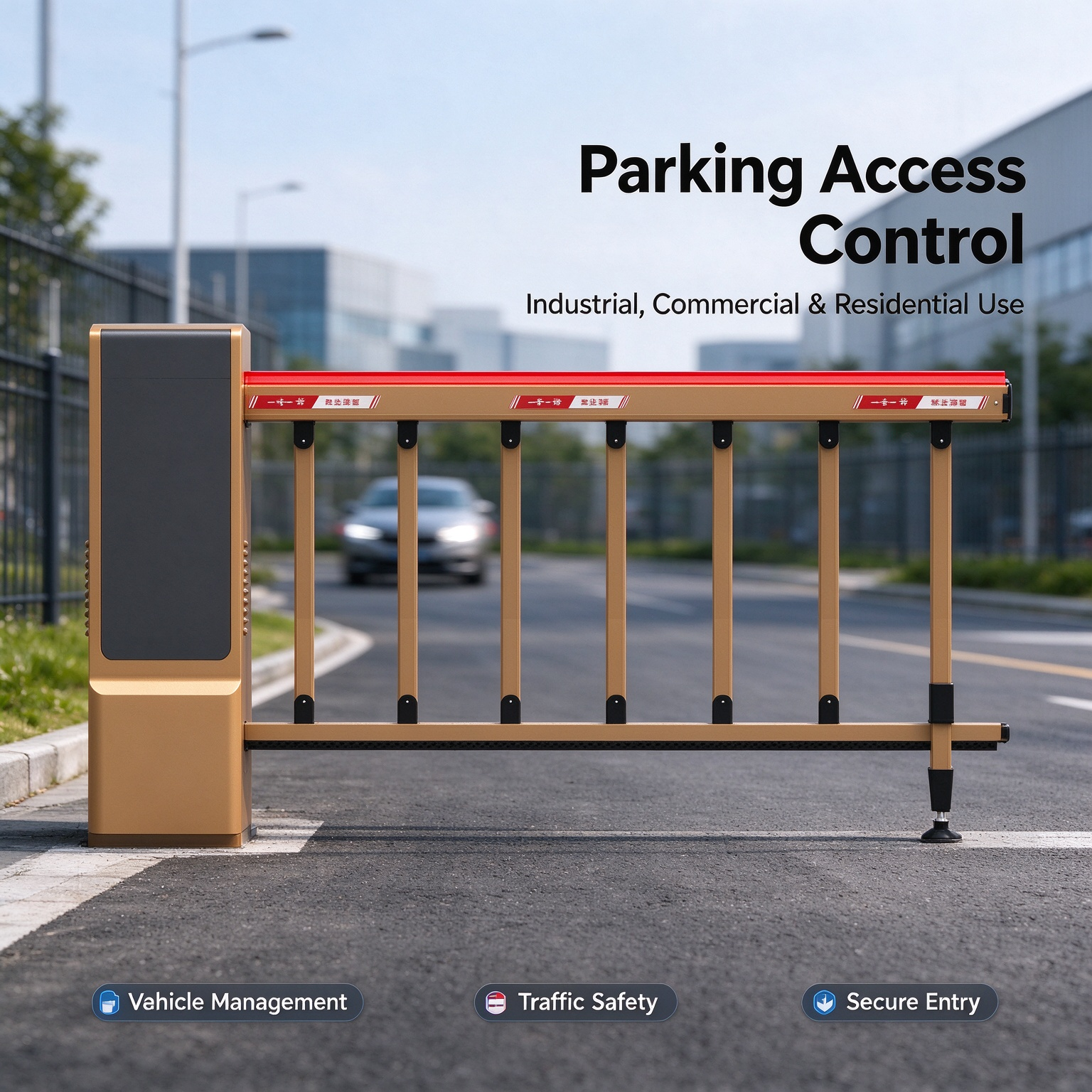
1. What is a parking barrier safety sensor?
A parking barrier safety sensor is a detection device that monitors the area where the boom arm moves or a vehicle passes. It sends a signal to the barrier controller when it detects a vehicle or obstacle. Depending on the wiring and control logic, it can keep the boom arm raised, prevent it from closing, or trigger a reversal when there is an obstruction.
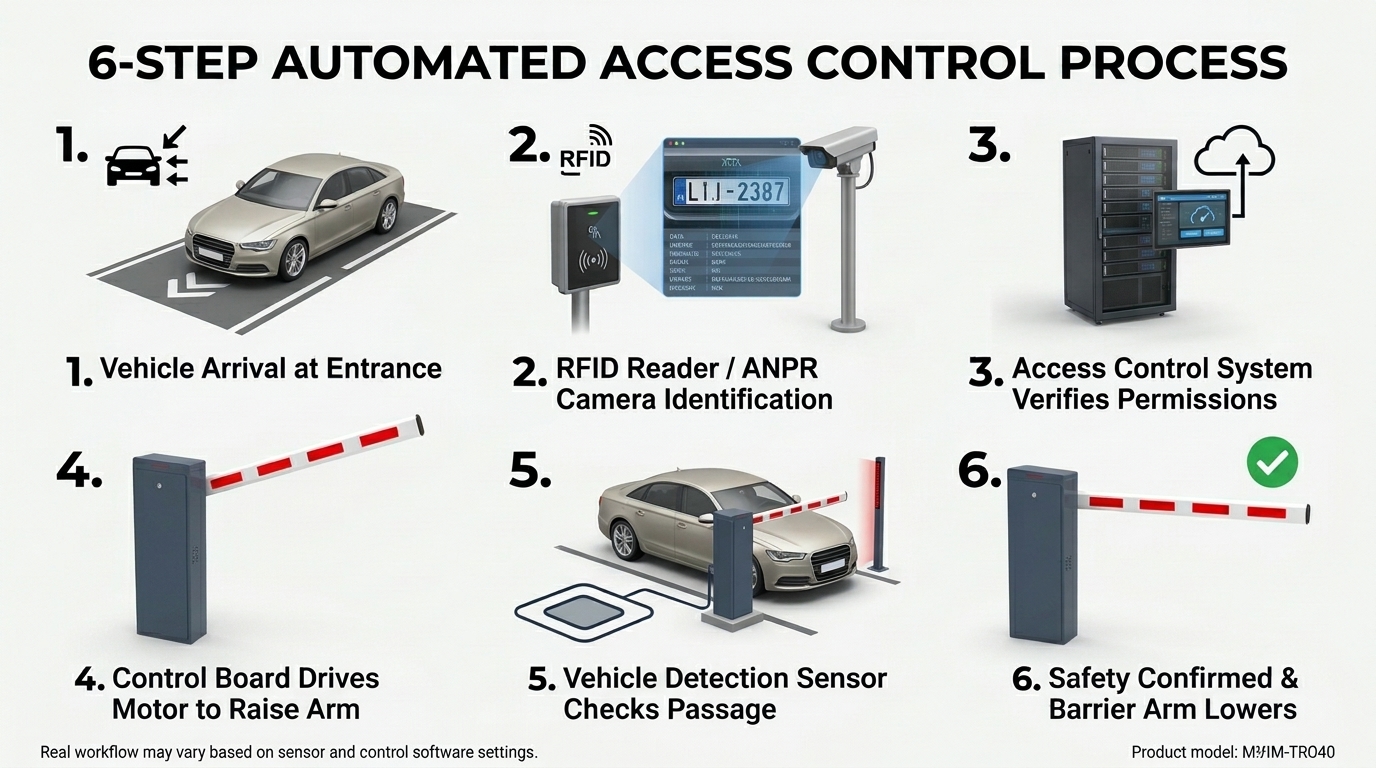
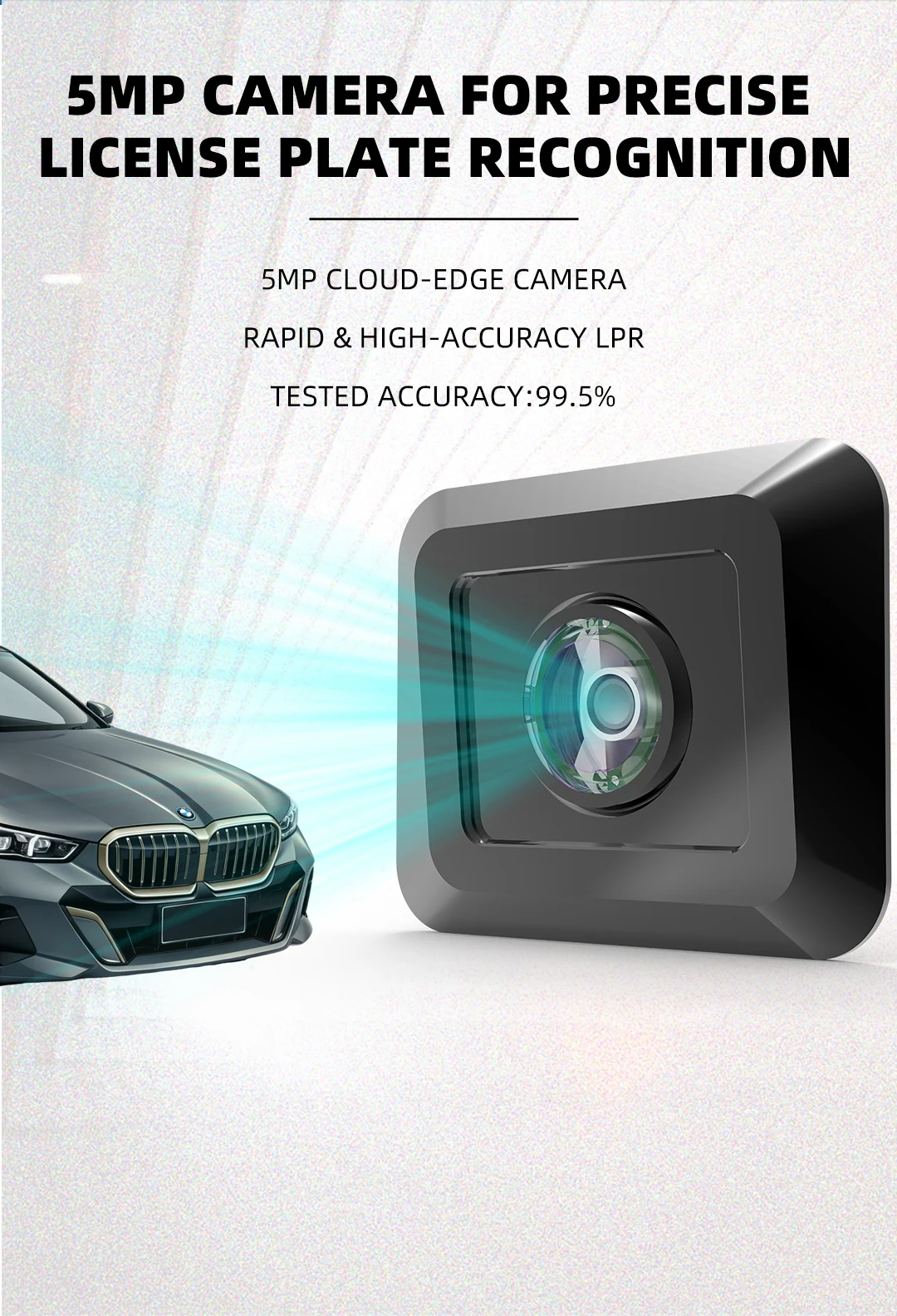
It is important to note that not all sensors work the same way. Some sensors mainly detect vehicles in the lane; some guard the boom arm's danger zone itself; and some access control readers verify whether a vehicle is authorized. An RFID reader or LPR/ANPR camera is not automatically a substitute for an anti-smash safety sensor.
2. Why are safety sensors important in Philippine parking facilities?
Vehicle and pedestrian protection
When a vehicle is under or near the boom arm, the barrier system must know about it before closing. A correct sensor arrangement helps reduce the risk of impact, scratches, windshield damage and injury. Even so, site safety procedures must still be followed, with clear traffic signs and lane markings.
Better traffic flow
At condominium and commercial parking entrances, false or inconsistent detection can cause repeated stops, manual intervention and long queues. A suitable sensor helps the controller know when it is safe to close the barrier and when it should stay open.
Less equipment damage and downtime
A boom arm collision can mean repair costs, replacement parts and a temporary lane closure. For high-traffic facilities, preventive detection and scheduled testing are an important part of the maintenance plan.
3. Main types of parking barrier safety sensors
3.1 79GHz millimeter-wave radar sensor
A 79GHz radar sensor uses millimeter-wave radar technology to detect the presence and movement of vehicles or other objects in the detection zone. In the BAROXON Philippines product range, there is a 79GHz anti-collision radar and a smart radar detector designed for automatic boom barrier applications. Some models offer vehicle/pedestrian differentiation and wireless configuration, depending on the exact model and setup.
One practical benefit of radar-based detection is that it does not need a traditional road-cut induction loop at every installation. This can be useful on existing concrete or asphalt driveways where the operator does not want extensive pavement cutting. However, the mounting position, detection angle, sensitivity and possible blind spots still need to be checked.
3.2 Infrared photocell sensor
An infrared photocell uses an infrared beam between a transmitter and a receiver. When the beam is broken by a vehicle or obstacle in between, it sends a signal to the control system. It can be used as part of the safety arrangement at gate and barrier installations, but its coverage must be confirmed to match the actual danger zone.
A photocell needs correct alignment and a clean optical surface. If it is obstructed, misaligned, or mounted at the wrong height, it may not see all relevant obstacles. At outdoor sites, rain, dust, direct sunlight and physical obstruction should be considered.
3.3 Inductive loop detector
An inductive loop detector uses a wire loop installed under the driveway surface. When a vehicle passes over or stops on the loop, the electrical characteristics of the loop change and the detector registers the vehicle. This technology has long been used in parking and vehicle access applications.
Loop detection is reliable when the design and installation are correct, but it requires road cutting, loop cable installation and proper sealing. Maintenance should also be planned, because the loop cable can be affected by pavement repair, water ingress or physical damage.
3.4 Radar and infrared combination
There is a BAROXON product listing for a portable boom gate radar and infrared sensor combination. This kind of configuration can combine wider vehicle/object detection with localized beam interruption detection. The exact product configuration and controller wiring should be reviewed to establish how the two detection channels work together.
4. Radar vs. infrared vs. inductive loop: which should you choose?
No single sensor is best for every site. For an existing parking facility that does not want to cut pavement, a radar option may be attractive. For a defined pedestrian or vehicle crossing line, a photocell can help. For a lane with established loop infrastructure, an inductive loop may remain practical. At a high-risk entrance, layered detection may be needed instead of relying on one sensor alone.
5. BAROXON sensor models and specification checks
Ba-RDR79 79GHz Parking Radar Sensor
In BAROXON product information, the Ba-RDR79 radar sensor is described as a 79GHz FMCW MIMO radar with single-channel relay/RS485 output. The product specification states 10–24V operating voltage, IP66 protection, a default front detection distance of 3m (configurable up to 6m), and default side detection of ±0.5m (configurable up to ±1.5m). These values apply to this model only and should be confirmed against the latest datasheet before ordering.
Ba-GPA-LD102 79GHz Smart Radar Loop Detector
The Ba-GPA-LD102 is described on the BAROXON product page as a 79GHz anti-collision radar and an alternative to a traditional ground induction loop detector. The stated features are human-and-vehicle separation, a response time of 75–85ms, IP66 protection and a 9–24VDC power range (12V default). Verify the exact firmware, output interface and compatible controller before including it in a project specification.
Do not assume that all BAROXON radar models share the same detection range, response time, output signal or protection rating. Request the model-specific datasheet and wiring diagram for the exact boom barrier controller that will be used on site.
6. How do you choose a safety sensor for your facility?
Review the lane layout and traffic profile
Measure the lane width, boom-arm length, vehicle stopping point, pedestrian route and the distance from the sensor to the barrier. Separate the entry lane from the exit lane if vehicle flow differs. Also consider motorcycles, low-clearance vehicles, SUVs, delivery vans and trucks that pass through regularly.
Define exactly what needs to be detected
Clarify whether the objective is vehicle presence detection, pedestrian or obstacle detection, anti-smash protection, or a combination of these. Do not buy on the “safety sensor” label alone; ask for a demonstration of how the barrier behaves when a vehicle is in the detection zone.
Check controller compatibility
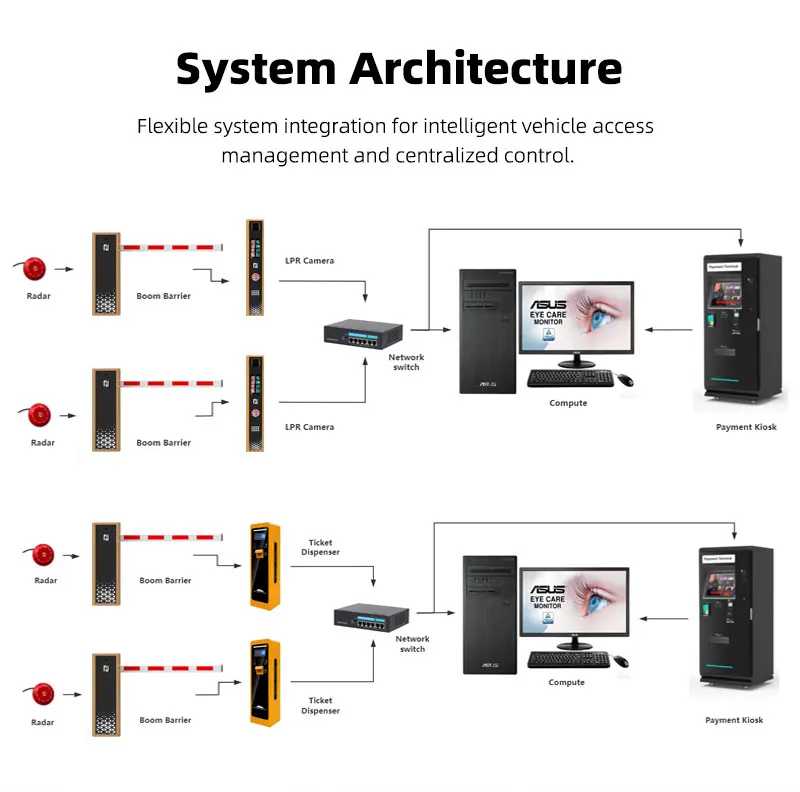
Confirm the supply voltage, relay output or RS485 communication, normally-open/normally-closed logic where applicable, wiring terminals and response behavior. The installer should know how the sensor sends its signal to the barrier controller and what the fail-safe behavior will be if power or communication is lost.
Consider Philippine weather and site conditions
For outdoor parking facilities in Manila, Cebu, Davao and other locations, consider heavy rain, heat, dust, standing water, direct sunlight and vibration. Check the IP rating of the exact sensor model, the cable protection and the mounting enclosure. The IP66 rating stated for some BAROXON radar models should not be attributed to all sensors or to the whole barrier system.
Plan maintenance and sensor access
The maintenance team should be able to inspect and test the sensor easily. Record the installation position, sensitivity setting, wiring, controller input and test results. Set an inspection schedule that matches the facility's traffic volume and environmental exposure.
7. Installation and commissioning checklist
Before the parking barrier system is turned over, a qualified installer should carry out the following:
- Confirm the correct sensor model and controller compatibility.
- Check the mounting height, angle, detection zone and possible blind spots.
- Secure the power and signal wiring; protect the cables against water and physical damage.
- Configure the detection sensitivity according to site conditions.
- Test a vehicle at the normal stopping position and with different vehicle types.
- Test pedestrian and obstacle detection if it is supported by the sensor and the project design.
- Verify that the boom arm will not close while the safety input is active.
- Test the response to a power interruption or signal fault according to the manufacturer's procedure.
- Record the settings and commissioning results for future maintenance.

8. Regular maintenance: what should be checked?
A safety sensor is not “install and forget” equipment. During routine inspection, check for a loose mounting bracket, moisture or corrosion, a dirty lens, a cut or pinched cable, a changed detection zone, or a new object blocking the sensor. For radar, check for changes in mounting angle and calibration; for a photocell, confirm alignment and a clean optical path; for an inductive loop, monitor the detector status and the condition of the pavement.
Keep a documented functional test in line with the manufacturer's instructions and the site risk assessment. Never test the anti-smash function by placing a person under a moving boom arm. Use a safe, controlled test procedure and isolate the lane if necessary.
If false detection, unexpected closing or failure to detect keeps recurring, stop using the affected lane where there is a safety risk and have the system checked by a qualified technician. Do not simply raise or lower the sensitivity without an assessment, because that may solve one problem while creating another safety gap.
9. Common mistakes facility managers should avoid
- Relying on LPR or RFID as safety protection. LPR and RFID are for identification and access authorization; they are not a substitute for obstacle detection.
- Choosing a sensor without reviewing the lane geometry. A wrong mounting position may not cover the actual danger zone.
- Not checking the controller input. However good the sensor is, it cannot deliver the right safety response if the wiring or logic is wrong.
- Assuming all radar is the same. Detection range, output, power supply, response and environmental rating differ by model.
- No regular functional test. Sensor alignment or the site layout may change after installation.
10. FAQ: Parking barrier safety sensors
Q1. What is the best safety sensor for an automatic boom barrier?
There is no universally best sensor. It depends on the lane layout, traffic type, installation constraints, controller compatibility and risk level. 79GHz radar, infrared photocells and inductive loops use different detection methods and have different installation requirements.
Q2. Does a radar safety sensor need road cutting?
Road cutting is usually not required to mount a radar sensor, because it can be fixed to a suitable bracket or mounting point. However, correct positioning, power and signal wiring, configuration and functional testing are still required.
Q3. Can radar and a photocell be used together?
Yes, radar and a photocell can be combined if they are compatible with the barrier controller and the safety logic is clearly defined. The installer should design how the signals are combined and what action the barrier takes when a detection occurs.
Q4. Does IP66 mean the whole barrier gate is waterproof?
No. An IP rating refers to the protection of the specific device or enclosure that carries that rating. If a radar sensor is IP66, it does not mean the barrier cabinet, motor, controller and all connectors are also IP66.
Q5. How often should safety sensors be tested?
Set the testing frequency based on the manufacturer's instructions, traffic volume and site risk assessment. A test should also be carried out after a repair, sensor repositioning, controller replacement or change in lane layout.
Q6. Can safety radar be added to an existing boom barrier?
In many installations, a compatible radar sensor can be added to an existing barrier system, but the controller input, supply voltage, mounting space, signal type and safety logic must be reviewed. Have the installer assess the current equipment before buying.
11. Final recommendation for facility managers
For facility managers in the Philippines, choose a parking barrier safety sensor based on the actual hazard and traffic pattern, not just the product name or the advertised range. 79GHz radar can be a good option for flexible vehicle detection and installations that want to avoid road cutting; an infrared photocell is useful at defined beam-protection points; and an inductive loop can still suit sites with existing loop infrastructure.
Before finalizing a purchase, request the model-specific datasheet, wiring diagram, controller compatibility confirmation and recommended installation layout. For high-traffic car parks, condominiums, malls and industrial entrances, include safety sensor testing in the commissioning and preventive maintenance plan.
Talk to BAROXON about your parking barrier safety requirements. Share your lane width, boom-arm length, traffic volume, existing controller model and site conditions so we can determine the right radar or sensor configuration for your project in the Philippines.
Latest News
Baroxon® | Leading Boom Barrier Manufacturer
Advanced Security Access Control and Intelligent Parking Solutions.
Company Strength
Adequate Inventory
Fast Shipping
Our Products
CONTACT US
Address: No. 2 Wanshou Road, International Innovation Industrial Park, Jinan, Shandong, China


© COPYRIGHT 2025 Baroxon® | Leading Boom Barrier Manufacturer

Contact Us
Professional Manufacturer of Vehicle Barriers & License Plate Recognition Cameras,Smart Parking Access Control Solutions for Global Clients,Reliable Barrier Gates + LPR Systems, Customized to Your Project,From residential communities, commercial shopping malls, industrial parks to highway toll stations, our matched barrier & LPR sets can realize automatic license plate identification, automatic gate lifting, real-time access records, automatic charging and remote management.