Baroxon® | Leading Boom Barrier Manufacturer

RFID vs ANPR Parking System: Key Differences
Release time:
2026-10-30
Introduction
In the operation of a parking area in the Philippines—such as a condominium, office building, commercial complex, subdivision, or industrial facility—fast and reliable identification of authorized vehicles is essential. Two common technologies for this are RFID (Radio Frequency Identification) and ANPR (Automatic Number Plate Recognition). Both can be used with an automatic boom barrier, but they differ in how they identify a vehicle, the equipment required, and the access-control process.
In simple terms, RFID uses a radio signal to read the RFID card or tag assigned to a user or vehicle. ANPR, meanwhile, uses a camera and image-processing software to read the vehicle's plate number. The right choice depends on vehicle volume, user types, entrance conditions, security policy, and the parking operator's budget.
Quick answer: RFID identifies authorized vehicles through a card or tag, while ANPR reads the plate number with a camera and software. RFID suits regular registered users, ANPR suits ticketless and plate-based records, and the two can be combined when stricter verification is needed.
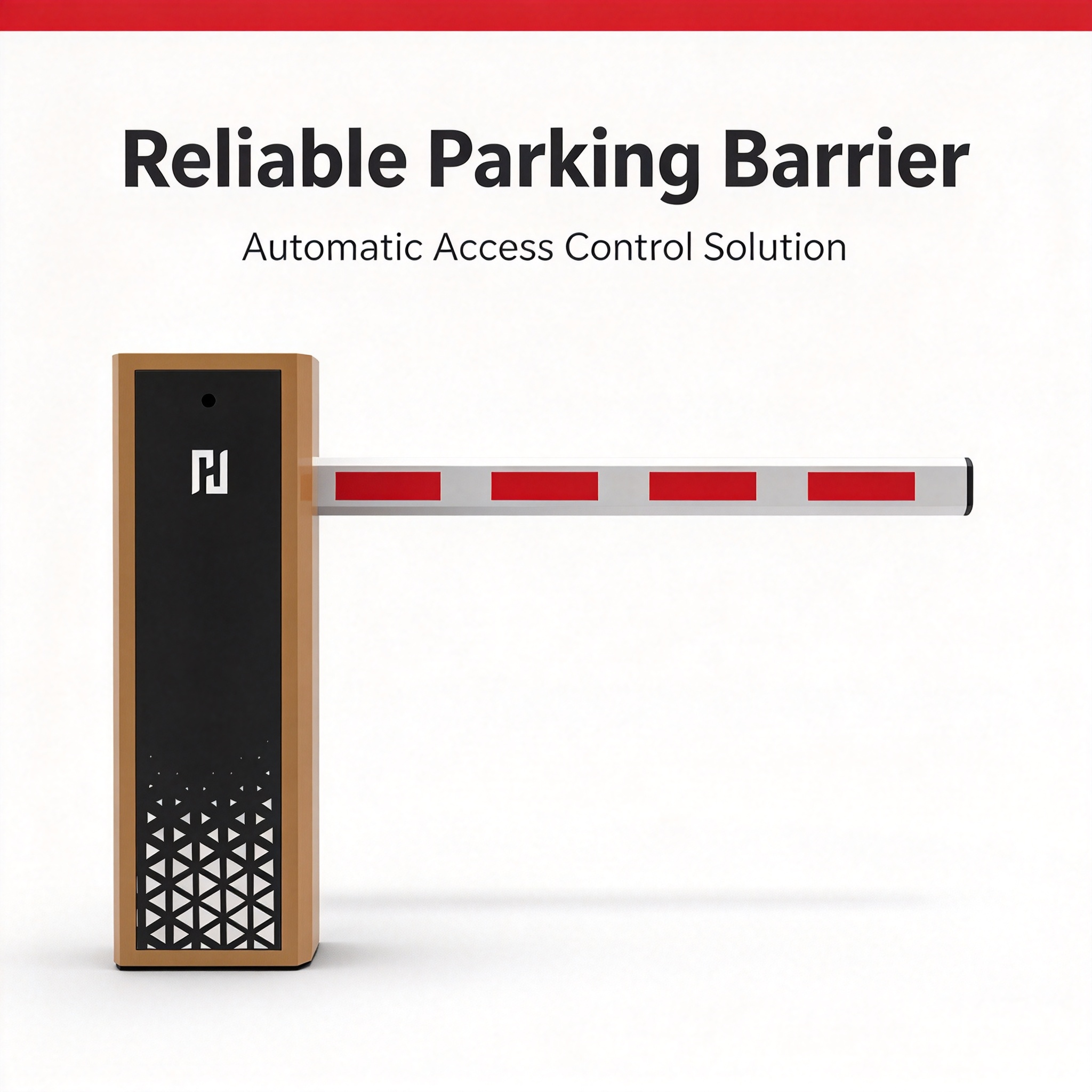
1. What Is an RFID Parking System?
An RFID parking system uses a radio-frequency reader and an RFID credential—usually a card, key fob, or vehicle tag—to identify an authorized vehicle or person. When a valid credential is presented or detected by the reader, the information is sent to the access controller. If the credential is approved, the controller sends a command to the boom barrier to open.
For regular users such as residents, employees, and registered tenants, RFID is practical because a unique card or tag can be assigned to each account. Lost or no-longer-authorized credentials can also be disabled, depending on the parking management software and configuration. For longer-range reading, there are UHF RFID solutions that use a suitable long-range reader and vehicle tag; these are not the same as a standard short-range card reader.
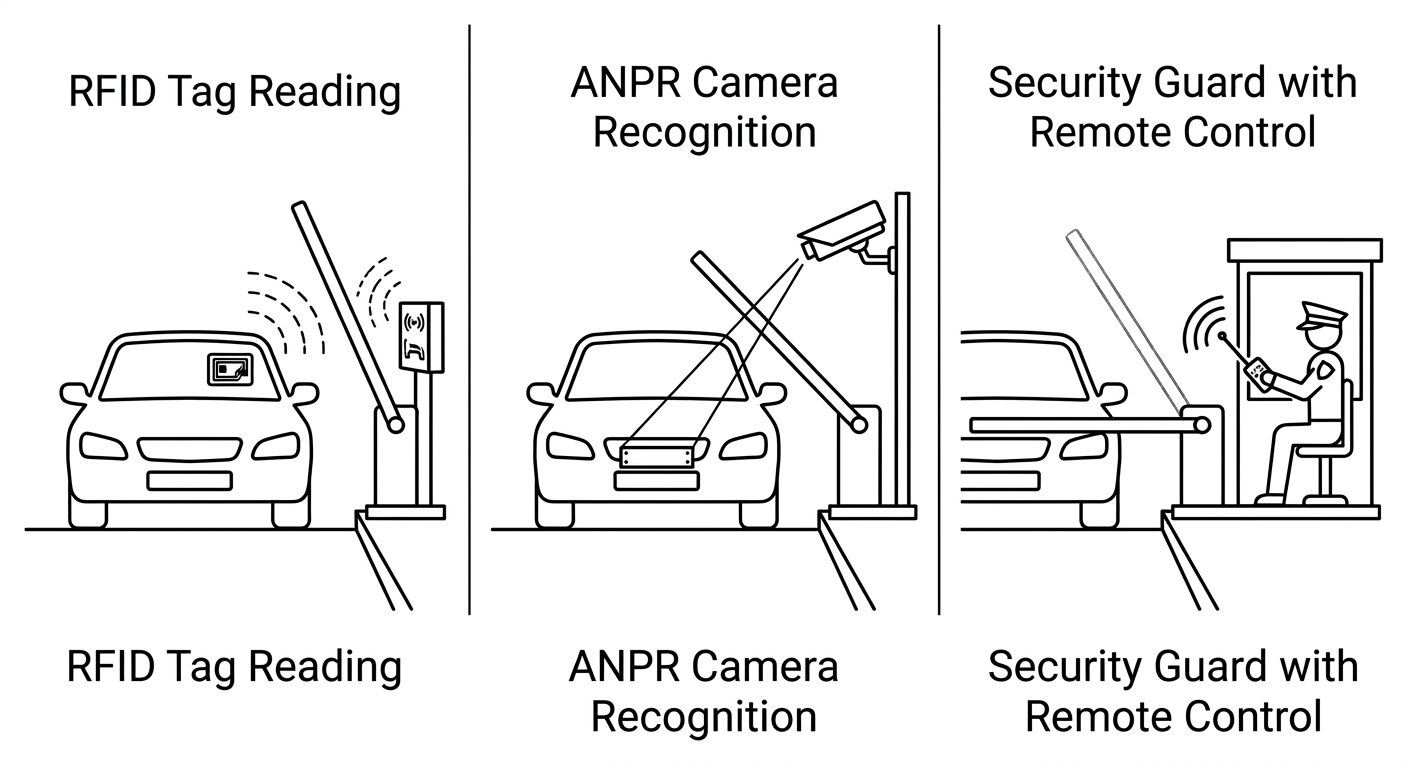
2. What Is an ANPR Parking System?
An ANPR parking system—also called an LPR or License Plate Recognition system—uses a camera to capture an image of the plate number and software to read its characters. The system typically compares the recognized plate number against an authorized vehicle list or database. If it passes the configured access rules, the system can trigger an automatic boom barrier.
ANPR can be convenient because the driver does not need to tap a card or open the window to present a credential. It is useful for ticketless parking, visitor vehicle management, and sites that want vehicle entry records tied to the plate number. However, performance depends on camera placement, lighting, viewing angle, plate condition, weather, image quality, and software configuration. The capture and storage of plate data should also comply with applicable privacy requirements and site policy.

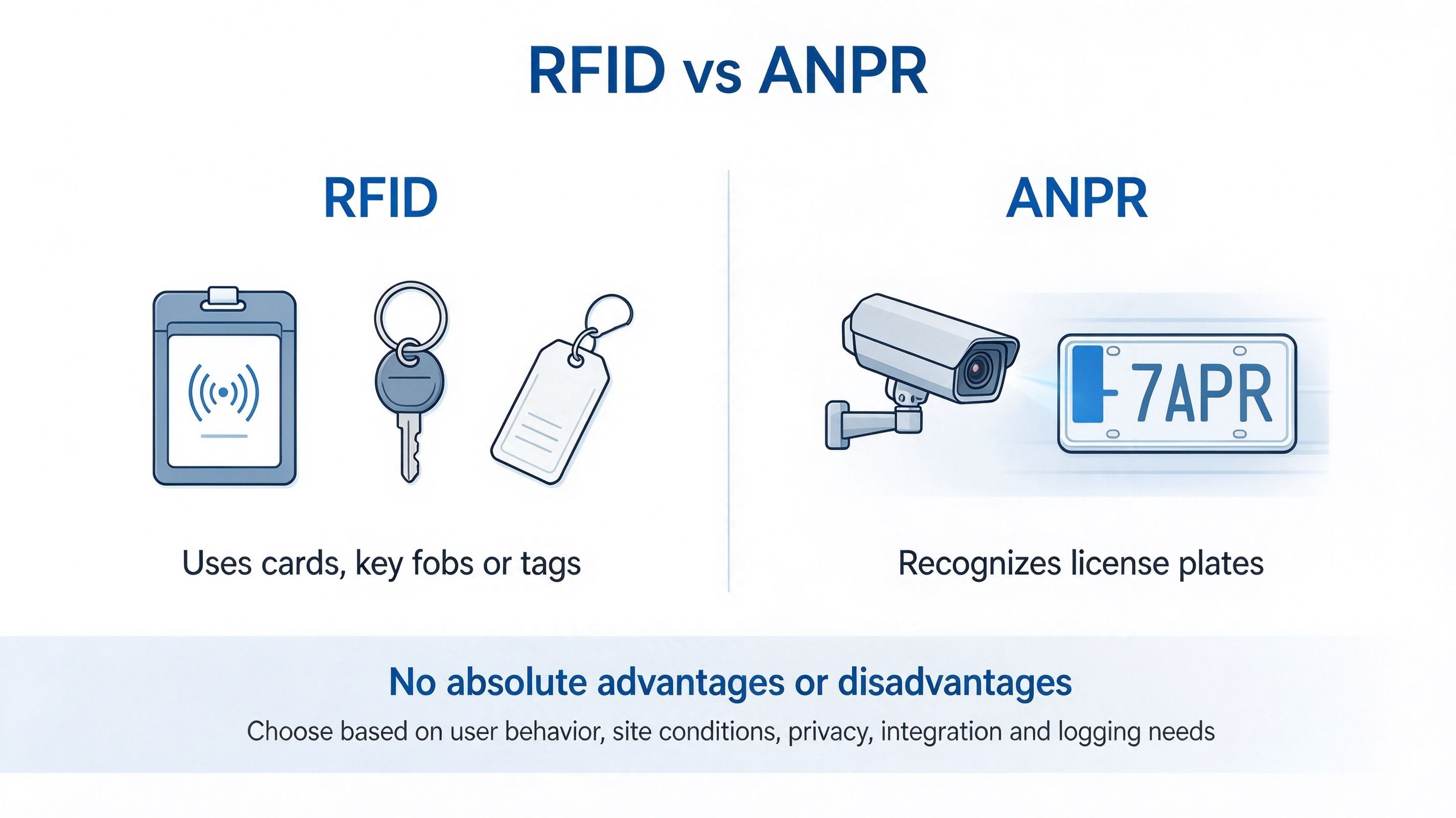
3. RFID vs ANPR: Key Differences
No single technology is best for every parking facility. RFID is simpler for a controlled group of regular users, while ANPR is more natural when identifying the vehicle by plate number matters. Actual system capability depends on the reader, camera, software, controller, and integration included in the project.
4. Which Is Faster for Entry and Exit?
Neither RFID nor ANPR is automatically faster in every situation. With RFID, credential reading can be fast if the reader range, tag position, and lane layout are correct. In a UHF setup, the vehicle tag may be detected without presenting the card to the reader. But if tag placement is wrong, there is radio interference, or the reader is incompatible, failed reads can occur.
With ANPR, the plate can be recognized automatically as the vehicle approaches, which reduces manual action by the driver. But it requires the right camera angle, sufficient light, appropriate shutter/exposure settings, and a responsive database. In both systems, barrier opening time, vehicle detection, controller response, and lane design matter. For peak-hour traffic, test the full entry-and-exit sequence on the actual site before finalizing the specification.
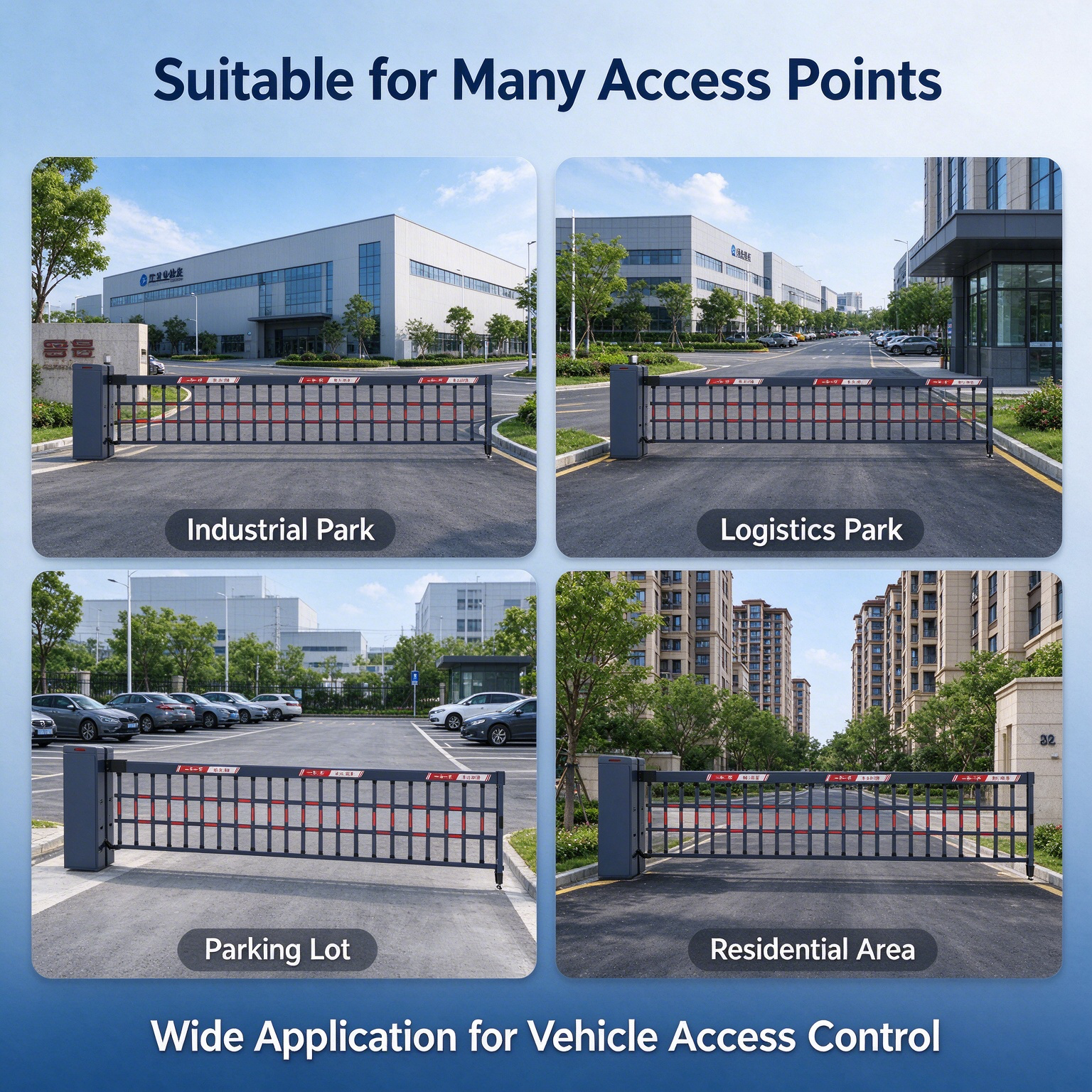
5. Which Is Better for Condominium, Office, and Commercial Parking?
Condominium and subdivision. If most users are residents with permanent vehicles, an RFID card or UHF vehicle tag may be practical. If there are many visitors and delivery vehicles, ANPR can help link the entry record to the plate number. A resident RFID and visitor ANPR workflow can also be combined if the system supports it.
Office building. For employees and fleet vehicles, assigned RFID credentials are easy to manage. For visitors, contractors, and meeting guests, plate registration or ANPR-based validation can be used according to the building's policy.
Mall and public parking. ANPR can be useful for ticketless vehicle entry and plate-based records, but visitor turnover, payment integration, and exception handling must be considered. A camera alone is not enough if parking fee calculation, a payment terminal, or occupancy management is also required—the software integration must be confirmed.
Industrial and logistics facility. UHF RFID may be more suitable for registered fleets and delivery vehicles with vehicle tags. ANPR can also be added for plate verification, audit trail, or visitor vehicle records. The right combination depends on the security level and traffic process.
6. Can RFID and ANPR Be Combined?
Yes. In many projects, there is no need to choose only one. RFID can serve as the primary credential for residents or employees, while ANPR is used for plate verification, visitor access, or an additional audit record. For example, the system can check whether the plate number read by the camera matches the vehicle linked to the RFID account. This kind of workflow requires a compatible camera, RFID reader, database, and parking management software.
It is important to note that not every integration comes automatically with every barrier gate. Before buying, ask the supplier for the system architecture and a list of included components: boom barrier, RFID reader, vehicle tag/card, ANPR camera, controller, software, network equipment, and safety accessories. Request a demo of normal access, invalid credential, unregistered plate, tailgating alert, and network interruption scenarios where applicable to the project.
7. What to Consider for Philippine Installations
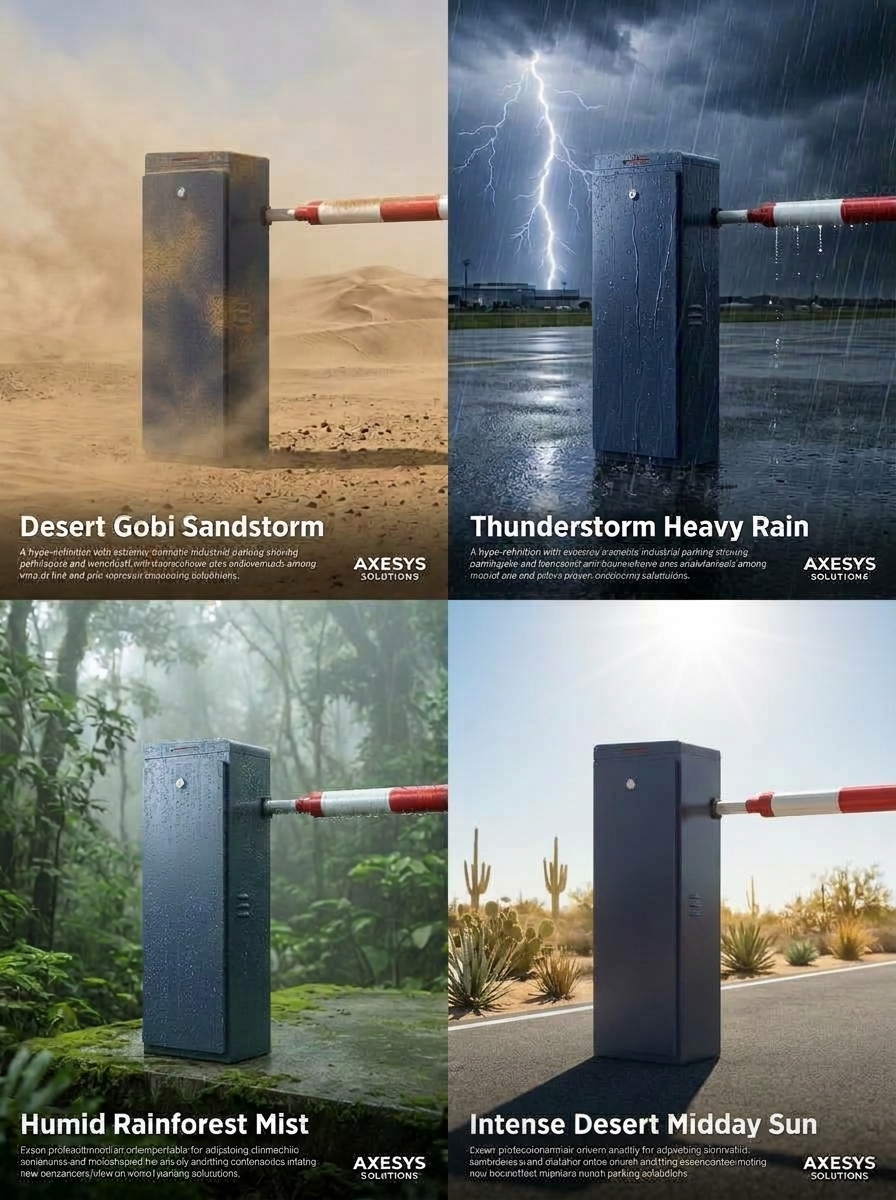
In the Philippines, heavy rain, humidity, heat, dust, and outdoor lighting conditions must be considered. For ANPR cameras, check housing protection, nighttime illumination, glare control, rain exposure, and camera mounting position. The plate must be clearly visible at the actual approach distance and vehicle speed. If there are tinted windshields or headlight glare, test the camera at different times of day.
For RFID, check the reader type, frequency, tag compatibility, mounting position, and possible radio interference from other equipment. For both systems, ensure proper grounding, surge protection, network connection, and a backup/manual operation procedure. Confirm the IP rating and environmental limits of the exact camera, reader, and barrier model; do not assume that all components have the same rating.
8. Security, Privacy, and Data Management
In an RFID system, the issuing, renewal, and disabling of cards or tags must be managed. There should be a process for lost credentials and for changes in vehicle ownership or user access. A simple RFID identifier should not be treated as a complete security solution; controller security, credential management, and access logs still matter.
In an ANPR system, plate numbers and the related entry/exit timestamps may be personal data depending on the context and applicable law. Limit access to records, set a retention period, use a secure network, and clarify who may view or export data. For Philippine deployments, have your data processing and privacy notice reviewed by your Data Protection Officer or legal adviser to ensure compliance with the Data Privacy Act and related regulations.
9. How to Choose the Right BAROXON Configuration
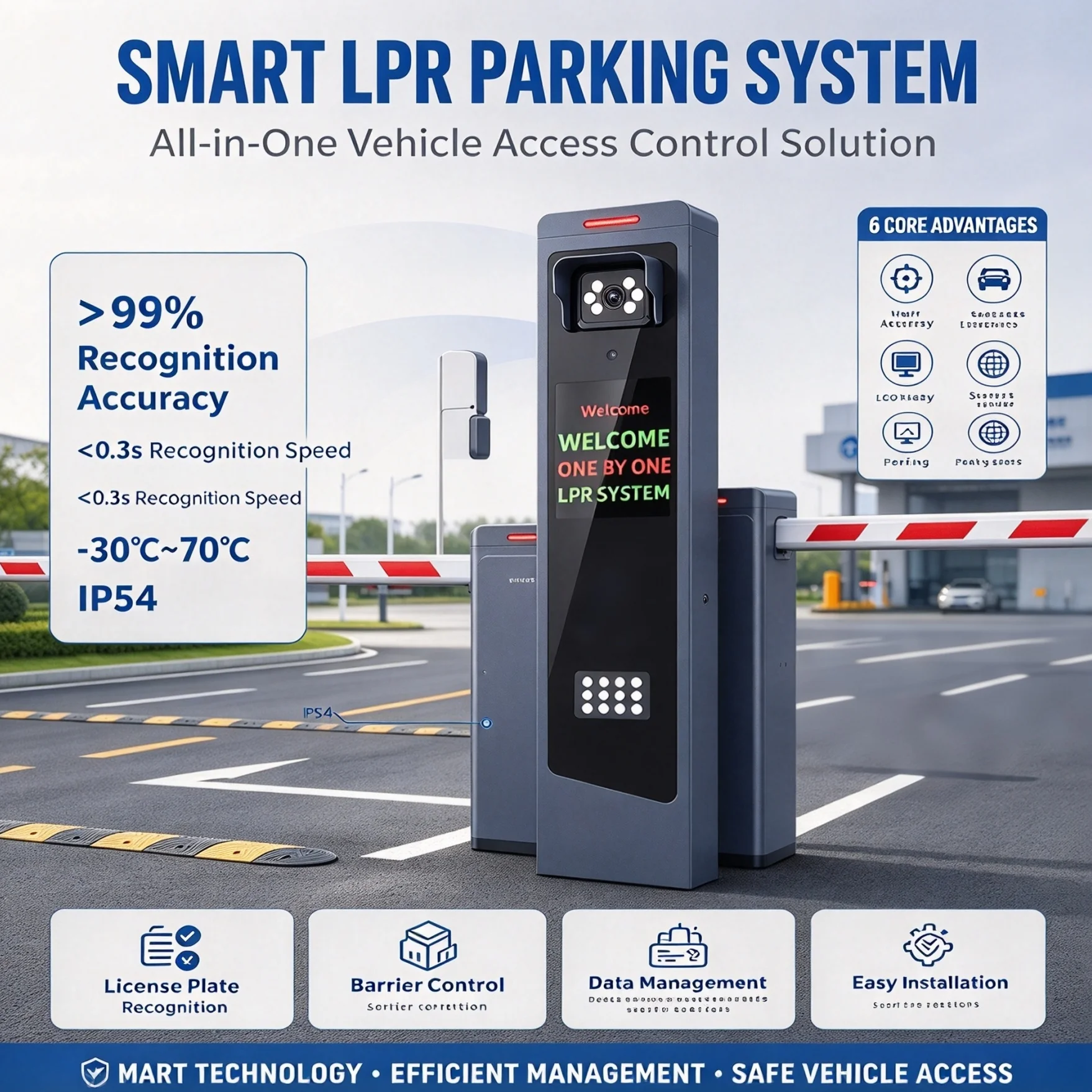
The BAROXON Philippines website presents both RFID and LPR/ANPR-related parking products. Related solutions include the Straight Arm LPR & RFID Automatic Identification Barrier Gate, the Smart 24V DC LPR Parking Traffic Barrier System, the Adjustable Speed 24V Boom Parking Gate with UHF System, and ANPR/LPR cameras and parking management solutions. This shows that the vehicle barrier and identification technology can be configured to the project's requirements.
Before choosing, prepare the following details for the supplier:
- Number of regular vehicles, visitors, and delivery vehicles.
- Number of entry and exit lanes and the width of each lane.
- Whether RFID card, UHF vehicle tag, ANPR camera, or combined verification is required.
- Expected vehicle cycles per day and peak-hour traffic.
- Indoor, covered, or outdoor installation and the lighting/weather conditions.
- Whether integration with parking fees, visitor registration, the condominium database, or an existing access-control platform is needed.
- Data storage, user permissions, reporting, and privacy requirements.
- Safety devices, emergency release, warranty, and after-sales support.
Confirm the exact model number and bill of materials. Having RFID and ANPR capability in the product range does not mean that the same reader, camera, software, or license is included in every package. The quotation should state what is included and what is not.
10. RFID or ANPR: Which Should You Choose?
Choose RFID if most users are regular and registered, you want credential-based access, and the operator can manage card or vehicle tag issuance. Consider UHF RFID if longer-range vehicle-tag reading is needed and the site layout is compatible.
Choose ANPR if plate-based identification, ticketless entry, or recording vehicle movements without relying on a card carried by the driver matters. Just make sure the camera and software suit the site's plate format, lighting, and traffic conditions.
Choose combined RFID + ANPR if you need layered verification—for example, RFID for resident/employee credentials and ANPR for plate confirmation or visitor management. Integration requirements and possible costs are higher, so the operational benefit should be clear before choosing it.
Frequently Asked Questions (FAQ)
1. Are RFID and ANPR parking systems the same?
No. RFID reads a radio-frequency card or tag, while ANPR uses a camera and software to read the vehicle's plate number. Both can trigger an automatic barrier when the access rules are met.
2. Which is better for condominium parking in the Philippines?
If most users are residents with registered vehicles, RFID is practical. If there are many visitors and plate numbers must be recorded, ANPR may be more useful. The two can also be combined if the system supports it and stricter verification is required.
3. Does an ANPR parking system need an RFID card?
Not for plate-based recognition itself. ANPR identifies the plate number using a camera. However, the operator may add RFID as a backup or second verification method.
4. Does ANPR work at night or when it rains?
It can, if the camera system has suitable low-light or night-vision capability and the installation and settings are correct. Actual plate visibility must be tested in rain, glare, and different lighting conditions; do not assume that all cameras perform the same.
5. Can RFID and ANPR be used at the same boom barrier?
Yes, if the barrier controller, readers, camera, software, and database integration are compatible. It should be specified whether they will be used as alternative credentials or as two verification steps.
6. What should you ask a supplier before buying?
Ask for a system diagram, exact model numbers, component list, RFID frequency/tag compatibility, ANPR camera specifications, software functions, integration scope, data storage policy, warranty, and commissioning requirements.
Conclusion
The main difference between RFID and ANPR parking systems is the method of identification: RFID uses a card or vehicle tag, while ANPR uses a camera to read the plate number. For regular users, RFID may be easier to manage; for ticketless and plate-based vehicle records, ANPR may be more suitable. In projects that require a higher level of verification, the two can be combined.
For Philippine parking projects, choose the system based on actual vehicle flow, site conditions, privacy requirements, and software integration—not just the advertised features. Confirm with BAROXON the exact barrier model, RFID reader or UHF setup, ANPR camera, controller, software, and safety accessories included in the quotation.
Call to action: Looking for an RFID, ANPR, or combined parking access solution in the Philippines? Share your property type, number of regular and visitor vehicles, number of lanes, and preferred access workflow with BAROXON. This will help match the boom barrier, RFID/UHF reader, ANPR camera, and parking management configuration to your site.
Latest News
Baroxon® | Leading Boom Barrier Manufacturer
Advanced Security Access Control and Intelligent Parking Solutions.
Company Strength
Adequate Inventory
Fast Shipping
Our Products
CONTACT US
Address: No. 2 Wanshou Road, International Innovation Industrial Park, Jinan, Shandong, China







© COPYRIGHT 2025 Baroxon® | Leading Boom Barrier Manufacturer

Contact Us
Our passion is to bring your ideas to life. Work with our design team to create a one-of-a-kind custom finish or cladding system to create a truly unique space. Together we can make your story stand out. If you need something to request a sample, request pricing, or request a demo, please fill out the contact form below. Explain your request in as much detail as you can and a representative will contact you within 1 business day.