Baroxon® | Leading Boom Barrier Manufacturer

Reduce Vehicle Queues at Your Parking Entrance
Release time:
2026-10-30
A long queue at the parking entrance is not just an inconvenience for drivers. It can also cause traffic build-up on the driveway, delay deliveries, add work for security personnel, and create a poor experience for tenants, customers, and visitors. In condominiums, office buildings, malls, hospitals, warehouses, and commercial parking facilities across the Philippines, the vehicle entry process needs to be well managed, especially during rush hour, weekends, and peak business periods.
Quick answer: Long queues at a parking entrance usually come from slow manual verification, unreliable plate reading, slow barrier operation, or poor lane layout. Combine the right access technology with a boom barrier that has a suitable opening speed, a clear lane layout, and a defined visitor process.
A queue rarely has a single cause. Manual ticket checking may be slow, credential verification may be repetitive, plate numbers may not be read quickly, barrier opening may be too slow, or the lane arrangement may be unclear. The effective solution is to combine the right access technology, a suitable boom barrier, a proper traffic layout, and a clear operating procedure.
1. Identify why vehicles are queuing
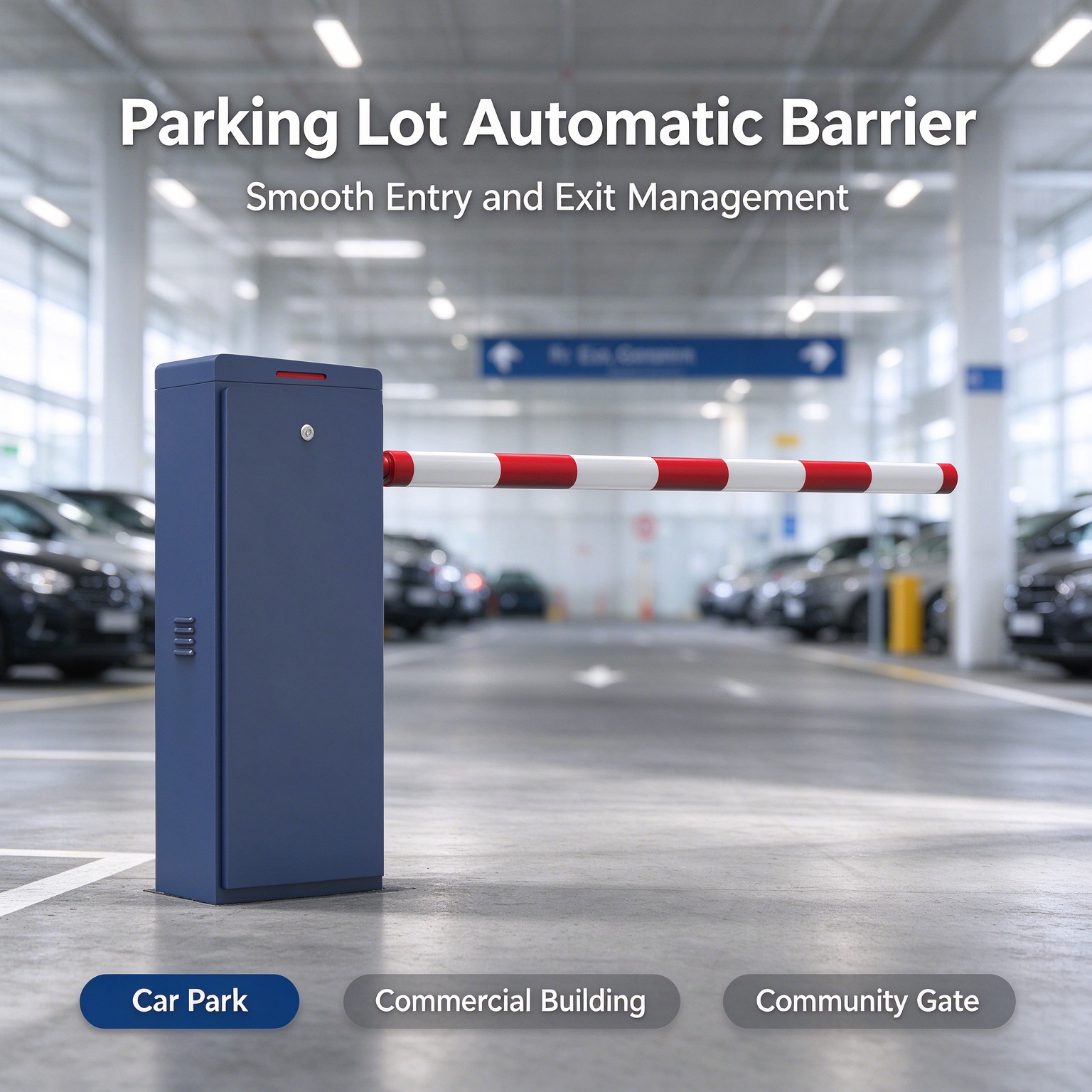
Before buying a new barrier gate or access-control equipment, observe the entrance during actual busy periods first. Record where the queue starts, how long the average vehicle processing time is, how many vehicles pass per minute, and what type of transaction most often causes the delay.
Common causes of parking entrance queues
- Manual ticket or pass checking: Every driver has to stop while an attendant gets, scans, or verifies the ticket or pass.
- Slow access verification: Delays occur when a visitor record has to be looked up, a tenant has to be called, or the guard has to be asked.
- Unreliable plate recognition: Entry can be delayed when the plate image is unclear, the camera angle is wrong, or the plate record does not match.
- Credential handling delays: Handing over and getting back a card, or repeatedly tapping an RFID card, lengthens the transaction.
- Slow barrier operation: The opening time of the boom arm becomes a bottleneck when vehicles arrive one after another.
- Poor lane layout: A tight turning radius, the wrong stopping position, or unclear lane markings cause hesitation and conflict.
- Insufficient staffing or unclear procedures: Drivers do not know where to stop or who to contact when an entry is not authorized.
2. Use LPR/ANPR for faster vehicle identification
License Plate Recognition (LPR), also called Automatic Number Plate Recognition (ANPR), uses a camera and recognition software to read a vehicle's plate number. When a plate is registered and authorized, the system can send an access signal to the barrier controller to open the boom gate without the regular driver having to take a paper ticket or hold an access card.
For office towers, residential communities, and commercial parking facilities, the plates of employees, residents, or registered tenants can be placed on a whitelist. For visitors, pre-registration or an approval workflow can be used, depending on the parking management software. This reduces repetitive manual checking, but there must be a clear exception process for unreadable plates, temporary vehicles, and unregistered visitors.
The BAROXON Philippines site has the Smart 24V DC LPR Parking Traffic Barrier System, the Straight Arm LPR & RFID Automatic Identification Barrier Gate, and integrated ALPR parking solutions. The actual camera, software, database, and controller configuration must be confirmed according to the selected package.
3. Choose RFID or UHF for frequent users
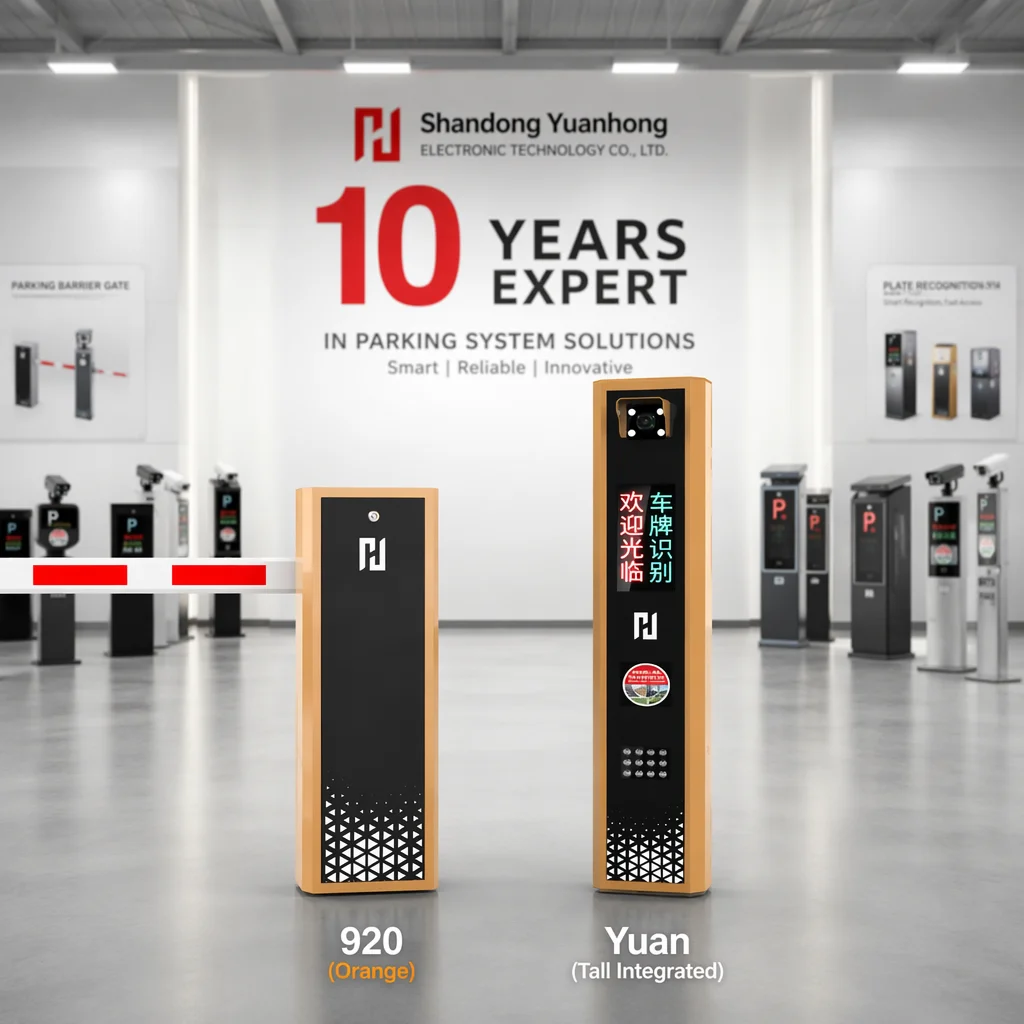
For residents, employees, fleet vehicles, and regular contractors, RFID access can speed up entry because there is no need to search for a name or check a paper permit on every arrival. The driver simply taps an authorized card or tag on a compatible reader, and if the credential is valid, the access system can send an opening command to the barrier.
For sites with a continuous flow of fleet or vehicles that cannot easily stop close to the reader, long-range UHF RFID may be considered. The BAROXON Adjustable Speed 24V Boom Parking Gate with UHF System is described for long-range RFID reading and high-frequency vehicle access. Reader range and tag position must be configured to reduce missed reads and accidental reads from the adjacent lane.
There is no need to use a single credential for everyone. LPR can be used for registered residents, UHF for fleet vehicles, and QR codes or visitor passes for guests—if the selected access-control platform supports them. What matters is that the driver journey is simple and that the queue is not lengthened by many consecutive verification steps.
4. Select a boom barrier with suitable opening speed
Even with a fast identification system, the boom arm will remain a bottleneck if it is slow. At a high-traffic entrance, review barrier opening time, closing time, boom-arm length, duty cycle, motor type, and compatibility with safety sensors. Do not choose based on the fastest advertised speed alone; the speed must suit the length and weight of the arm, the traffic pattern, and the safety requirements.
BAROXON Philippines offers high-speed barrier gate and adjustable-speed 24V boom parking gate options. The site also has product information describing opening speed ranges that vary by model. Ask for the model-specific datasheet and actual opening/closing cycle data for the exact arm length to be used in the project.
Vehicle gap should also be considered. If the barrier closes too quickly or the safety detection is wrong, the driver may be forced to wait longer. Good throughput is not simply the fastest arm movement; it is continuous operation with correct vehicle detection and safe clearance.
5. Integrate access control with the barrier controller
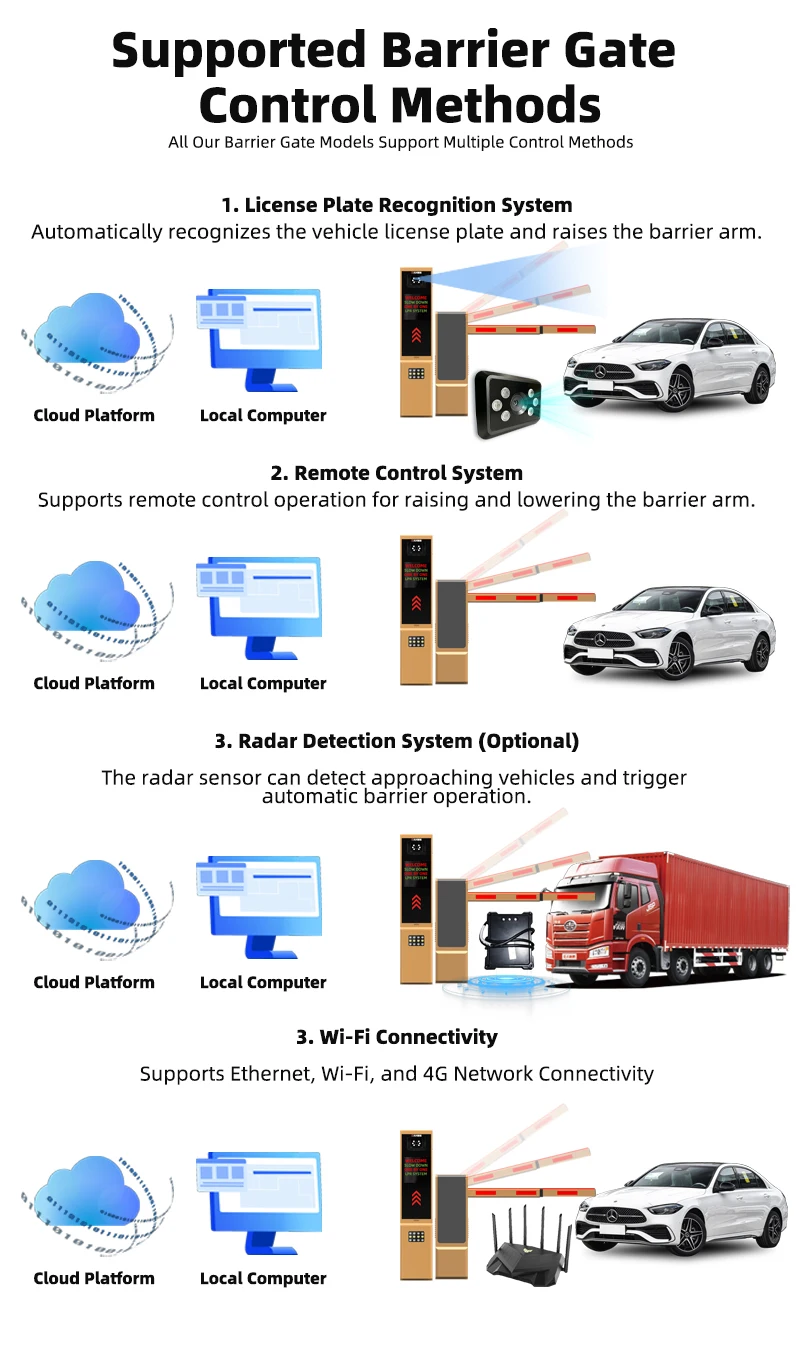
The entrance moves faster when the LPR camera, RFID/UHF reader, parking management software, and barrier controller communicate properly. The signal sequence must be clear: identify the vehicle, verify authorization, send the opening command, detect vehicle passage, then close the barrier only when the lane is clear and the safety logic permits it.
Avoid setups where the driver has to wait while the guard manually transfers information to another system. If visitor approval is required, it is better to verify it before the vehicle arrives—for example, through pre-registration or a digital visitor pass—so that only a quick confirmation is needed at the entrance.
Before integration, confirm the controller input/output, relay logic, communication interface, software API if needed, network reliability, and behavior when the system is offline. Also plan a manual override and an attendant workflow for power interruption, camera failure, or network downtime.
6. Use safety sensors to keep traffic moving safely
A vehicle detection sensor helps the barrier controller know whether a vehicle is still inside the detection zone. A radar sensor, inductive loop detector, or other compatible safety device can be used depending on the site design and controller support. This matters because a barrier that does not close safely can cause a collision, manual intervention, and longer queues.
In the BAROXON Philippines product range, there is a 79GHz Smart Radar Loop Detector and an Anti-Smash Radar Sensor for automatic boom barrier applications. The radar product pages describe vehicle detection and anti-collision functions; model compatibility, detection area, mounting position, and output configuration must still be confirmed before installation.
Note: LPR and RFID are for identification and authorization; they are not a replacement for a safety sensor. The access decision and the obstacle/vehicle-presence detection must be planned separately so that the boom arm does not close while a vehicle is still in the danger zone.
7. Improve lane layout and driver instructions
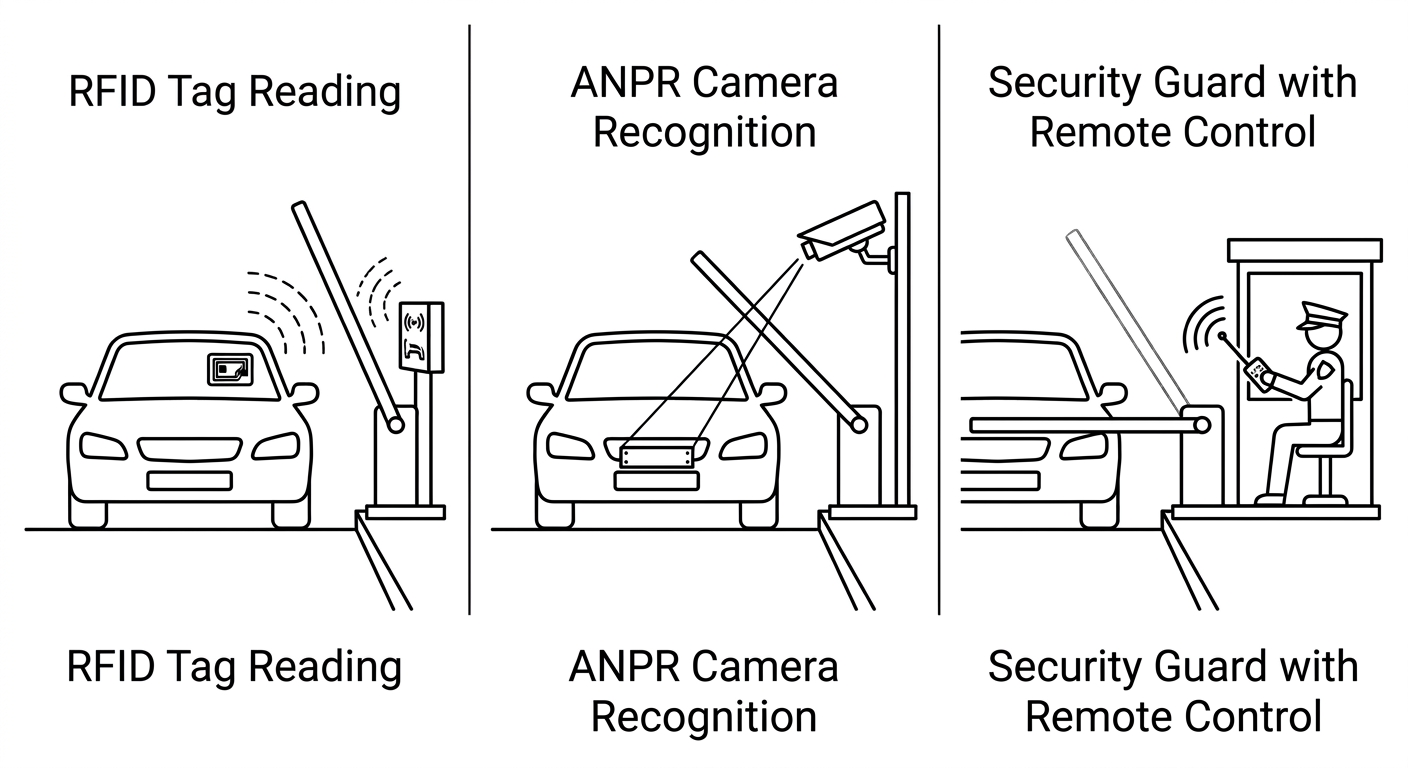
Not every queue problem can be solved with new equipment. Check whether the stacking distance before the barrier is sufficient, whether there is space for waiting vehicles without blocking the public road, and whether entry and exit traffic are clearly separated. Position the camera and reader so that the driver can see or reach them at the natural stopping point.
Install clear lane arrows, speed-limit signs, stop lines, and instructions such as “Wait for Barrier to Open” or “Registered Vehicles Only.” If there is a visitor lane, show early where guests should line up so they do not block regular users.
For multi-lane entrances, the resident/employee lane, visitor lane, and delivery/fleet lane can be separated if the site has enough space. There must be a sufficient turning radius for SUVs, vans, and trucks, and no blind corner that makes camera recognition or driver visibility difficult.
8. Prepare a separate process for visitors and exceptions
Visitor vehicles often need additional verification. If every visitor has to stop, call the tenant, and wait for manual approval at the gate, the queue will quickly grow. Use pre-registration, a temporary QR pass, a visitor whitelist, or a digital approval workflow if the parking platform supports it.
Also prepare an exception lane or safe pull-over area for unreadable plates, expired credentials, delivery vehicles, and emergency access. This way, one unresolved transaction does not have to block every vehicle behind it.
9. Monitor queue performance and adjust the system
It is not enough to say “it is faster now” after installation. Measure performance before and after the improvement. Average processing time per vehicle, maximum queue length, vehicles processed per minute, manual override frequency, failed LPR reads, and RFID/UHF read success rate can all be monitored.
Use representative measurement periods: morning rush, evening exit peak, weekend traffic, and delivery windows. Separate the data for regular users and visitors if their processes differ. If the failed-read rate is high, review the camera angle, lighting, plate condition, reader position, and tag placement before adding more lanes.
10. Example configurations for different Philippine facilities
No single configuration is right for everyone. The system should be matched to the parking policy, vehicle volume, visitor ratio, payment workflow, available space, and security requirements. It must also be confirmed that the selected hardware and software package actually includes the features the facility needs.
11. Practical implementation checklist
Before upgrading a parking entrance, use this checklist:
- [ ] Measure peak-hour vehicle volume and average processing time.
- [ ] Identify the main cause of the queue: identification, authorization, barrier speed, layout, or staffing.
- [ ] Choose the suitable access method: LPR/ANPR, RFID card, UHF tag, QR pass, or a combination.
- [ ] Match the boom barrier speed and arm length to the traffic demand and safety requirements.
- [ ] Confirm the compatibility of the camera, reader, software, and barrier controller.
- [ ] Provide vehicle detection and anti-collision protection based on the site risk assessment.
- [ ] Optimize the camera/reader position and the vehicle stopping line.
- [ ] Set up a visitor approval and exception-handling process.
- [ ] Prepare a manual override and downtime procedure.
- [ ] Measure queue length and processing time again after commissioning.
- [ ] Train guards, parking attendants, and maintenance personnel.
- [ ] Set up preventive maintenance and periodic functional testing.
12. FAQ: Reducing vehicle queues at parking entrances
Q1. What is the fastest way to reduce queues at a parking entrance?
The first step is to remove slow and repetitive manual verification for regular users. LPR/ANPR or RFID/UHF credentials can be used, together with a barrier gate that has a suitable opening speed and a well-planned lane layout. The actual bottleneck must be identified first before choosing a technology.
Q2. Is LPR better than RFID for parking access?
It depends on the user group and the site workflow. LPR is convenient for registered vehicles because the plate number is used for identification. RFID is practical for users who have an issued card or tag, while UHF can be used for long-range vehicle identification. These can also be combined.
Q3. Does a faster boom barrier always reduce queues?
Not always. A suitable opening speed helps, but if authorization is slow, the camera angle is wrong, or the lane layout is poor, the queue will remain. The whole vehicle processing cycle from approach to safe exit has to be reviewed.
Q4. Can one LPR camera control multiple lanes?
It is possible in some system designs, but it depends on the camera field of view, lane separation, software capability, and controller architecture. For reliable recognition, the system must be checked to confirm that it can clearly determine which vehicle and lane has a valid access request.
Q5. Are safety sensors necessary if the parking gate uses LPR?
Yes. LPR identifies the plate and helps decide whether the vehicle is authorized. It does not automatically protect the vehicle or a pedestrian from a moving boom arm. Suitable vehicle/obstacle detection and safety logic are still required.
Q6. How can a facility handle visitors without slowing regular traffic?
Use pre-registration, a temporary QR pass, or digital approval if the system supports it. Provide a clear visitor lane or pull-over area so that the manual verification of one guest does not block regular resident or employee traffic.
Conclusion: Build a faster, safer parking entrance
Reducing vehicle queues requires a coordinated solution. Combine fast and reliable vehicle identification, a suitable boom barrier, compatible safety sensors, a clear lane layout, and an efficient visitor process. For Philippine parking facilities, a practical starting point can be LPR for regular registered vehicles, RFID/UHF for card- or tag-based users, and high-speed barrier options for high-frequency entrances.
Before choosing equipment, review actual peak-hour traffic, lane dimensions, vehicle mix, access policy, and controller requirements. Ask for model-specific specifications and a system layout to confirm that the selected configuration suits the site and does not sacrifice safety for speed alone.
Call to action: Plan a more efficient parking entrance with BAROXON. Share the type of facility, number of lanes, peak-hour vehicle volume, and current access method so the right LPR, RFID/UHF, and automatic boom barrier configuration can be identified for your project in the Philippines.
Latest News
Baroxon® | Leading Boom Barrier Manufacturer
Advanced Security Access Control and Intelligent Parking Solutions.
Company Strength
Adequate Inventory
Fast Shipping
Our Products
CONTACT US
Address: No. 2 Wanshou Road, International Innovation Industrial Park, Jinan, Shandong, China







© COPYRIGHT 2025 Baroxon® | Leading Boom Barrier Manufacturer

Contact Us
Our passion is to bring your ideas to life. Work with our design team to create a one-of-a-kind custom finish or cladding system to create a truly unique space. Together we can make your story stand out. If you need something to request a sample, request pricing, or request a demo, please fill out the contact form below. Explain your request in as much detail as you can and a representative will contact you within 1 business day.