Baroxon® | Leading Boom Barrier Manufacturer

Automatic Parking Barrier System Philippines: How It Works
Release time:
2026-10-30
What Is an Automatic Parking Barrier System?
An automatic parking barrier system is a vehicle access-control solution that uses a motorized boom barrier and control equipment to manage vehicles entering and leaving a site. Instead of a guard manually raising the barrier for every vehicle, the system receives an authorization signal from an access device such as an RFID reader, UHF reader, LPR/ANPR camera, remote control, QR reader, or operator station. When the authorization is valid and the lane is safe, the controller raises the barrier arm; after the vehicle has passed, the arm returns to its closed position according to the configured control logic.
Quick answer: An automatic parking barrier system checks a vehicle's authorization through RFID, UHF, plate recognition, or another access device, then raises the boom arm only when the lane is safe. The exact setup depends on the site layout, the access method chosen, and the safety devices installed.
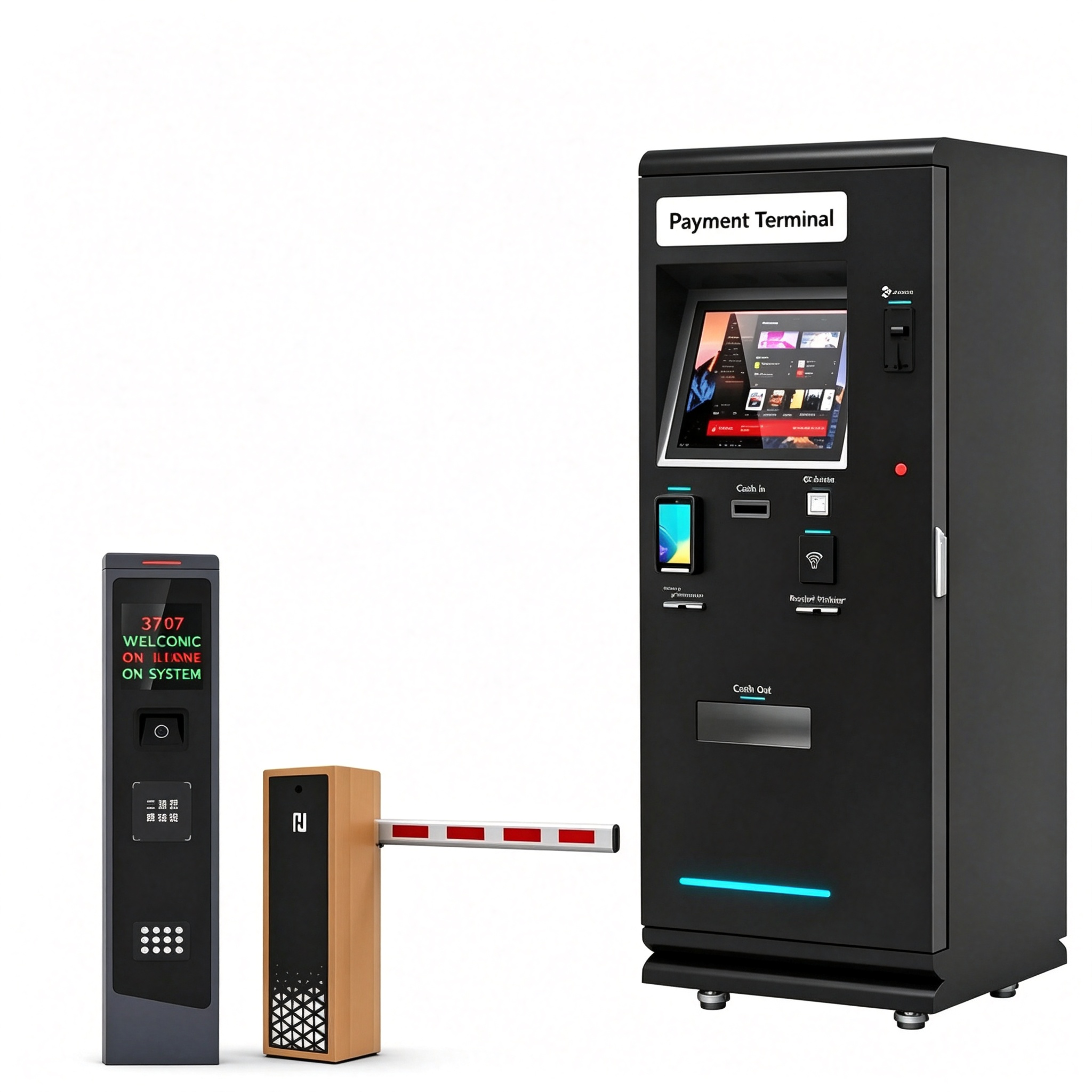
How Does the System Work as a Whole?
A typical automatic parking barrier operation has four main stages: vehicle detection, access verification, barrier control, and safe vehicle passage. The exact setup may vary depending on the site and the product selected. For example, the barrier may be standalone with a remote control, or integrated with RFID/UHF access control, LPR/ANPR, parking management software, CCTV, intercom, and payment workflow. Not every barrier model includes all of these devices or software as standard; compatibility and scope of supply must be confirmed.
Step-by-Step: How an Automatic Parking Barrier Works
1. Vehicle Detection — The Vehicle Is Detected
When a vehicle approaches the entrance lane, it may be detected by a loop detector, radar sensor, photoelectric sensor, or another compatible detection device. Depending on the design, detection is used to establish whether a vehicle is at the correct stopping point, whether a vehicle is still under the boom arm, or whether it is safe to begin the closing sequence. Correct sensor placement and configuration matter because smooth traffic flow and safety response depend on them.
2. Access Verification — The Right to Enter Is Checked
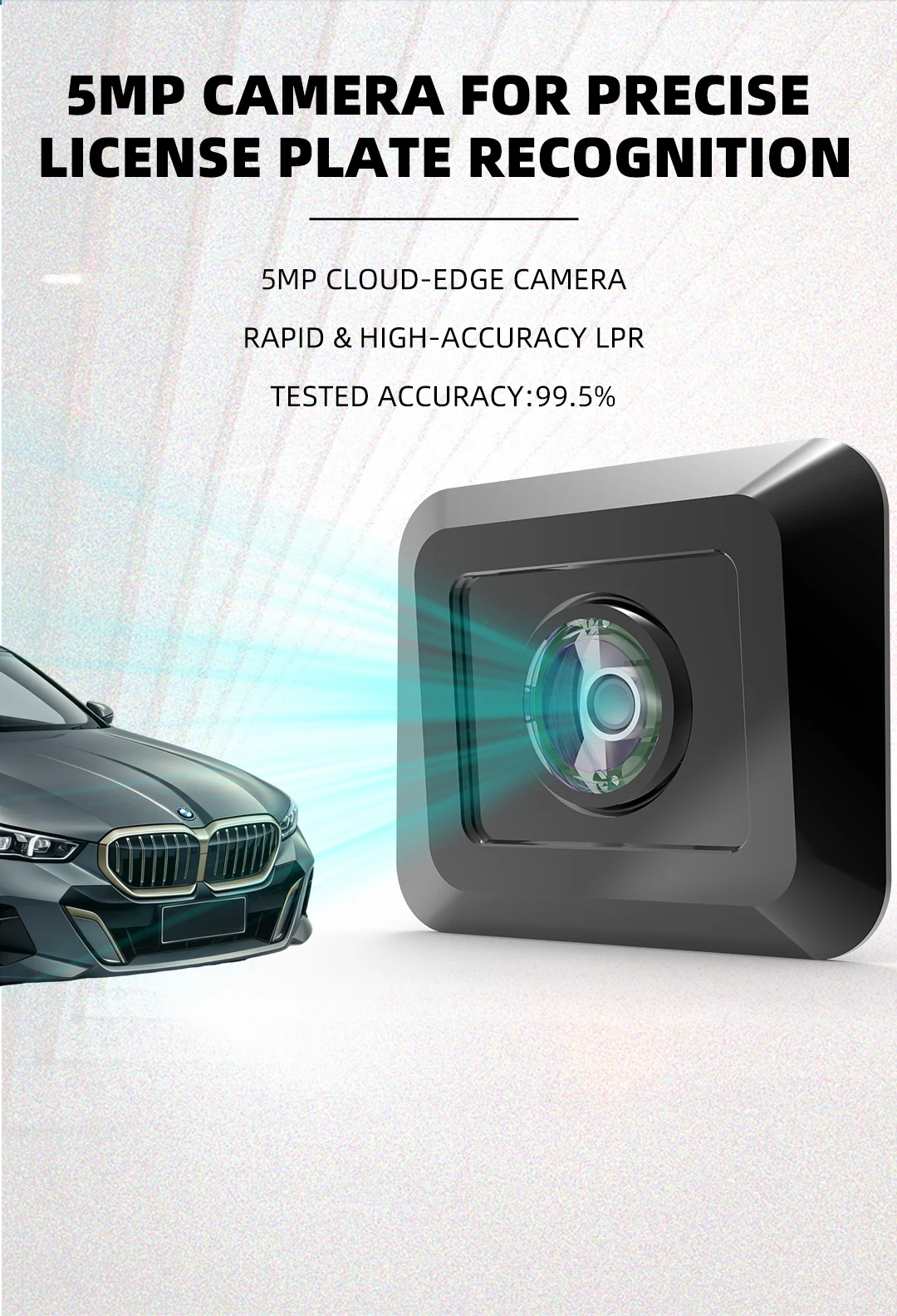
After the vehicle is detected, the access-control device verifies its permission. In an RFID setup, the card or credential is read; in a UHF setup, a compatible vehicle tag is recognized; in an LPR/ANPR setup, the camera captures the plate number and the recognition software checks it. Authorization may also come from a QR code, remote transmitter, intercom, or guard console. Access rules should be clear for residents, employees, visitors, delivery vehicles, and emergency vehicles.
3. Controller Sends the Open Command
When the credential or plate number passes the access rules, the access controller sends the opening command to the barrier control board. The drive mechanism powers the motor to raise the boom arm. In an integrated system, the software may also send an event to the parking database or management platform, depending on the available interface and configuration. The exact communication protocol and wiring should be confirmed with the supplier and installer.
4. Vehicle Passes Through
Once the boom arm is raised, the vehicle drives through the designated lane. The loop detector or radar may continue to monitor the vehicle's presence so that the barrier does not close while the vehicle is still in the danger zone. There should be sufficient lane width, clear pavement markings, a proper stop line, and good visibility for the driver. For a high-traffic entrance, the vehicle queue and turning path must be reviewed so that the public road or pedestrian route is not blocked.
5. Safety Check and Automatic Closing
When no vehicle or obstacle remains in the detection zone and the configured safety logic permits it, the barrier lowers the boom arm. The safety arrangement may use a loop detector, radar, photoelectric sensor, anti-crush logic, or another compatible device. Safety functions should not be assumed to be the same across all models. A qualified installer should test opening, closing, obstacle detection, emergency release, and response during a power failure.
6. Access Event Is Recorded
If the barrier is connected to parking management software or an access-control database, the entry/exit event, credential, plate number, timestamp, or transaction details may be recorded according to the system design and privacy policy. These records help with parking administration, incident review, and visitor management. Data collection should be limited to what is necessary, access credentials should be protected, and applicable privacy and data-protection requirements in the Philippines should be followed.

Main Components of an Automatic Parking Barrier System
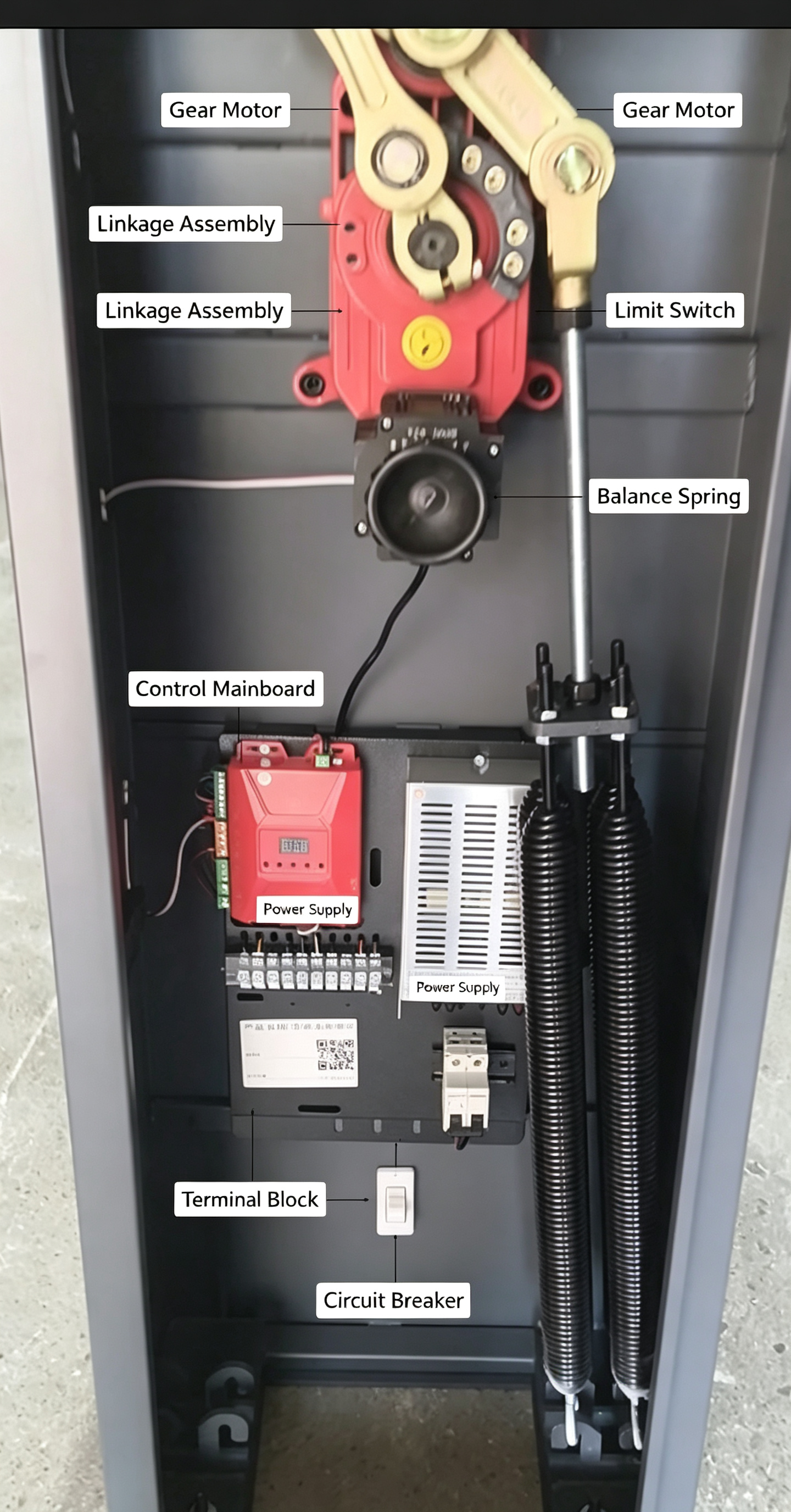
- Boom barrier cabinet and drive mechanism: This houses the motor, transmission, control board, and mechanical parts that move the arm. Choose according to lane width, arm type, operating frequency, and traffic volume.
- Boom arm: It may be straight, folding, or fence-style depending on entrance clearance and site requirements. A folding arm may suit some low-clearance entrances; model compatibility, arm length, and mounting dimensions must be confirmed.
- Access reader or recognition camera: This may be an RFID card reader, UHF reader, LPR/ANPR camera, QR reader, remote receiver, or intercom. Select the device according to the user workflow and confirm the interface with the barrier controller.
- Controller and control board: It receives and processes open/close commands, safety inputs, and status signals. In an integrated installation, it must be clear which controller manages the access decision and how the command is passed to the barrier.
- Vehicle detection and safety sensors: These may include an inductive loop detector, radar, photoelectric sensor, and other compatible devices. The sensor combination should be based on the risk assessment and the physical layout of the lane.
- Power supply and backup arrangements: Site power quality, grounding, protection, and whether backup power or a manual release procedure is needed should be reviewed. Do not assume that every barrier model has battery backup.
Common Access-Control Configurations
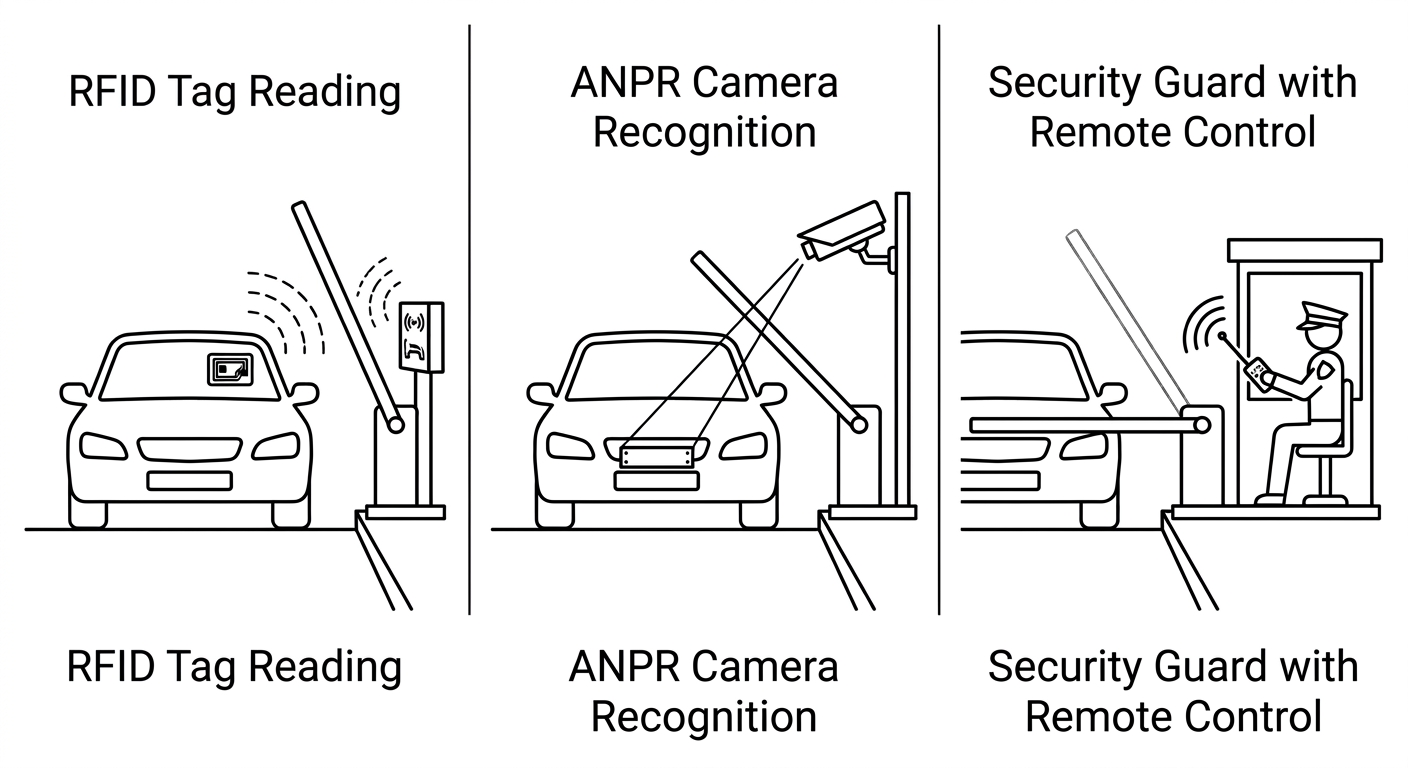
RFID Card-Based Parking Barrier
In an RFID configuration, an authorized user is issued a card or tag that the reader at the entrance reads. Access permissions for residents, employees, and registered users are easy to manage, and lost or expired credentials can be disabled if the management software supports it. For sites with many regular vehicles, RFID-based entry may be practical.
UHF Long-Range Vehicle Identification
A UHF reader may read a compatible vehicle tag from a longer distance than a typical close-range card tap, depending on the equipment and installation. This supports continuous vehicle access, but tag placement, reader angle, lane geometry, interference, and the possibility of reading the wrong tag from an adjacent lane must be reviewed.
LPR/ANPR License Plate Recognition
In an LPR/ANPR configuration, a camera captures the license plate and recognition software checks it. When the plate matches the authorization list and passes the configured rules, the access system may send an open command to the barrier. Performance depends on camera positioning, lighting, plate condition, vehicle speed, network, and software configuration; a manual review or alternate access process should be available for unreadable plates.
Remote, QR Code, Intercom, or Guard-Controlled Access
For visitor parking or smaller facilities, a remote control, QR code, intercom, or guard-operated console may be more suitable. These methods may also be combined with RFID or LPR for different user groups. Before deployment, define how temporary access is granted, how authorization is revoked, and how system downtime is handled.
Where Are Automatic Parking Barrier Systems Used in the Philippines?
- Condominiums and subdivisions: To manage resident, guest, delivery, and service vehicle access at entrance and exit lanes.
- Office buildings and business parks: To separate employee parking, visitor parking, and authorized service vehicles, and to link to an access database where needed.
- Shopping centers, hotels, and hospitals: To organize parking entry, manage peak-hour traffic, and set controlled lanes for service or emergency vehicles.
- Factories, warehouses, and logistics facilities: To control truck, fleet, contractor, and delivery access; the barrier duty cycle and arm configuration must match the actual operating demand.
- Schools and public facilities: To manage authorized vehicle entry and prevent unauthorized access, while keeping a clear pedestrian route and emergency access plan.
Benefits of an Automatic Parking Barrier System
A properly configured system can help deliver a more consistent vehicle access process, less manual gate operation, clearer authorization rules, and easier review of access events when management software is connected. It can also be integrated with RFID, UHF, LPR/ANPR, CCTV, intercom, or a parking payment workflow where the equipment is compatible. However, actual results depend on site design, maintenance, operator training, network reliability, and correct system integration.
How to Choose an Automatic Parking Barrier System
- Review lane dimensions and clearance. Measure the entrance width, available headroom, required arm length, and vehicle turning radius. Ask for an installation drawing to confirm that the cabinet and arm fit the actual layout.
- Determine traffic volume and operating cycle. Provide the average and peak vehicles per hour, along with the expected number of operations per day. Use this to select the barrier model, operating speed, and duty rating.
- Choose the access method. Decide whether RFID, UHF, LPR/ANPR, QR, remote, intercom, or mixed access is required. Consider residents, staff, visitors, delivery drivers, and temporary users.
- Plan the safety devices. Assess the vehicle path, pedestrian crossing, stopping position, and the risk of tailgating or premature closing. Have the sensor logic designed and commissioned by a qualified installer.
- Confirm integration requirements. If there is existing parking software, CCTV, an access database, payment terminal, or intercom, ask for protocol, wiring/interface details, and a clear scope of integration.
- Review weather exposure and maintenance. For outdoor installation, ask about enclosure protection, corrosion considerations, drainage, sun/rain exposure, and the maintenance schedule according to the model datasheet and site conditions.
- Request model-specific documentation. Verify the motor type, arm length, opening/closing time, duty cycle, power requirement, supported accessories, warranty, and spare-parts availability. Do not use a generic specification in place of the datasheet for the actual model.
BAROXON Automatic Parking Barrier Options
On the BAROXON Philippines website, you can review boom barrier and boom gate solutions, high-speed barrier gate products, automatic RFID/UHF barrier configurations, and LPR/ANPR vehicle identification systems. Some product configurations may offer straight-arm, folding-arm, or fence-style arm options. The exact arm type, reader, sensor, controller, and software support must be confirmed on the model page and in the quotation; do not assume that all of these are included in a standard package.
For UHF-based vehicle access, see the BAROXON adjustable-speed 24V boom parking gate with UHF system. For plate recognition or combined identification, review the straight-arm LPR & RFID automatic identification barrier gate and the integrated ALPR parking system. Use these as product references and match the configuration to the site survey, traffic data, and required interfaces.
Frequently Asked Questions
Does the parking barrier close automatically after the vehicle passes?
In many configurations, yes. A timer and a vehicle-detection input can start the closing sequence once the lane is clear. However, the behavior depends on the control logic, sensor setup, and configuration of the model itself; it should be tested at commissioning.
Is RFID required for an automatic parking barrier to work?
Not always. The barrier can operate with a remote control, push button, LPR/ANPR, UHF tag, QR code, intercom, or another compatible access device. What matters is that the controller supports the chosen input and that the integration is correct.
What is the difference between RFID and LPR/ANPR parking access?
RFID uses a card or electronic tag read by a reader, while LPR/ANPR uses a camera and software to recognize the plate number. RFID may be more suitable for registered users with issued credentials, while LPR may be convenient for plate-based authorization. Total system cost, lighting, plate quality, credential management, and the fallback process should be compared.
What happens during a power failure?
It depends on the barrier model and installation. There may be a manual release mechanism or a separate backup power arrangement, but battery backup should not be assumed to be standard. A written emergency procedure should be in place, and authorized staff should know how to operate the barrier safely during a power failure.
Can an automatic barrier be connected to parking management software?
Yes, if the barrier controller, access device, and software interface are compatible. Before purchasing, confirm the communication protocol, event data, network requirements, licensing, and who is responsible for integration, testing, and after-sales support.
How fast is an automatic parking barrier?
Operating time varies by model, arm length, motor, configuration, and safety requirements. Ask for the datasheet for the exact model and do not compare products using speed claims that have no equivalent test condition.
Conclusion
An automatic parking barrier system works through the coordination of vehicle detection, access verification, a controller command, a motorized boom arm, and safety monitoring. When selection and integration are correct, it can make vehicle access more organized in condominiums, commercial parking, office buildings, warehouses, and other facilities in the Philippines. The best configuration depends on actual traffic volume, lane dimensions, access method, safety plan, and equipment compatibility.
Call to action: Prepare the entrance dimensions, estimated vehicles per hour, preferred access method, and site layout, then contact BAROXON to assess the suitable barrier model and system configuration for your project.
- BAROXON Philippines official website — brand overview and product navigation.
- Adjustable-speed 24V boom parking gate with UHF system — UHF-based vehicle identification reference.
- Straight-arm LPR and RFID automatic identification barrier gate — combined plate recognition and RFID access.
- Integrated ALPR parking system and boom gate — integrated license-plate recognition workflow.
- Maximum-performance RFID portal barrier gate with straight steel arm — RFID portal and barrier product reference.
Latest News
Baroxon® | Leading Boom Barrier Manufacturer
Advanced Security Access Control and Intelligent Parking Solutions.
Company Strength
Adequate Inventory
Fast Shipping
Our Products
CONTACT US
Address: No. 2 Wanshou Road, International Innovation Industrial Park, Jinan, Shandong, China







© COPYRIGHT 2025 Baroxon® | Leading Boom Barrier Manufacturer

Contact Us
Our passion is to bring your ideas to life. Work with our design team to create a one-of-a-kind custom finish or cladding system to create a truly unique space. Together we can make your story stand out. If you need something to request a sample, request pricing, or request a demo, please fill out the contact form below. Explain your request in as much detail as you can and a representative will contact you within 1 business day.